


 |
CMB521S - CELL AND MOLECULAR BIOLOGY - 2ND OPP - DEC 2025 |
|
|
1 Page 1 |
▲back to top |
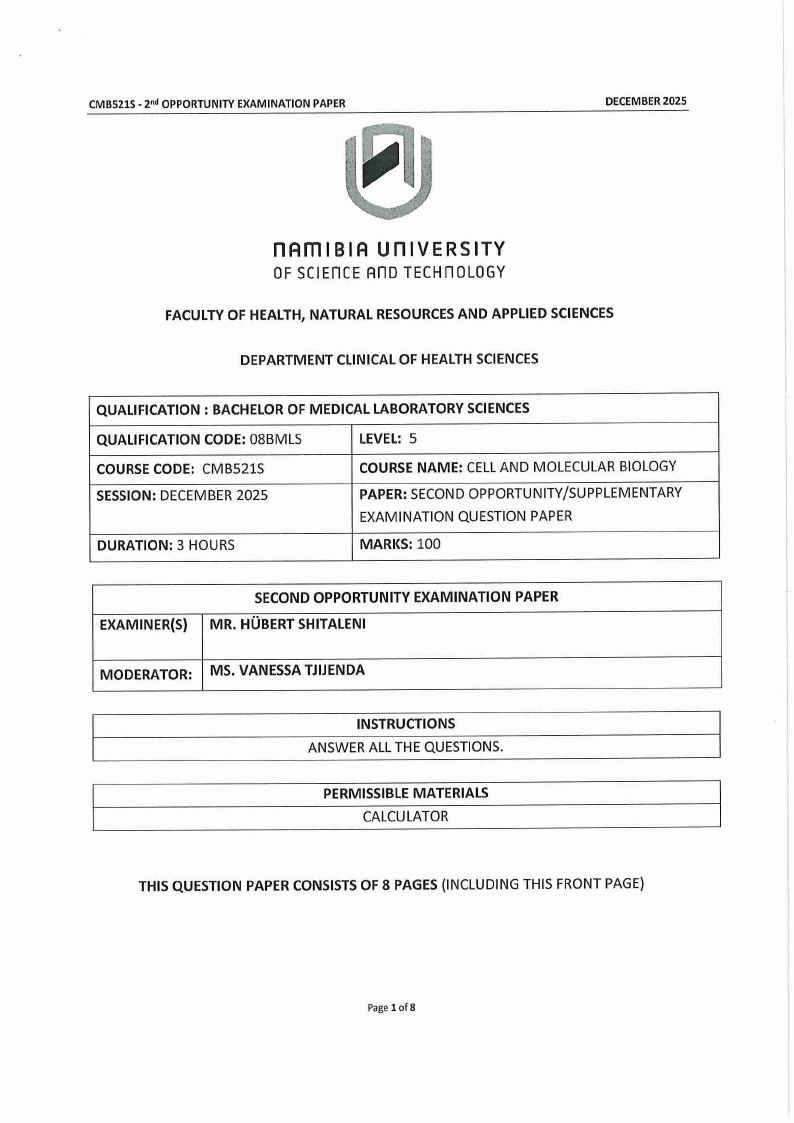
CMB521S - 2nd OPPORTUNITY EXAMINATION PAPER
DECEMBER 2025
nAmlBIA untVERSITY
OF SCIEnCE AnD TECHnOLOGY
FACULTY OF HEALTH, NATURAL RESOURCES AND APPLIED SCIENCES
DEPARTMENT CLINICAL OF HEALTH SCIENCES
QUALIFICATION : BACHELOR OF MEDICAL LABORATORY SCIENCES
QUALIFICATION CODE: 08BMLS
LEVEL: 5
COURSE CODE: CMB521S
SESSION: DECEMBER 2025
COURSE NAME: CELL AND MOLECULAR BIOLOGY
PAPER: SECOND OPPORTUNITY/SUPPLEMENTARY
EXAMINATION QUESTION PAPER
DURATION: 3 HOURS
MARKS: 100
SECOND OPPORTUNITY EXAMINATION PAPER
EXAMINER(S) MR. HUBERT SHITALENI
MODERATOR: MS. VANESSA TJIJENDA
INSTRUCTIONS
ANSWER ALL THE QUESTIONS.
PERMISSIBLE MATERIALS
CALCULATOR
THIS QUESTION PAPER CONSISTS OF 8 PAGES (INCLUDING THIS FRONT PAGE)
Page 1 of 8
|
|
2 Page 2 |
▲back to top |
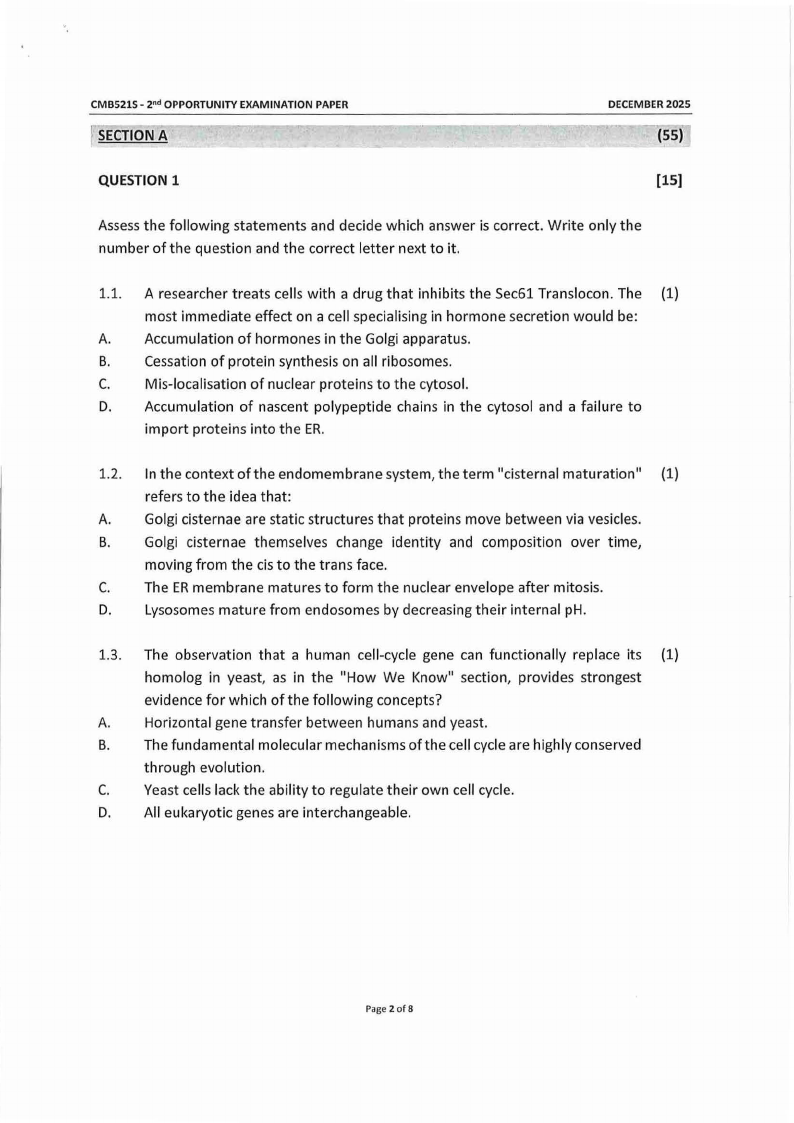
CMB521S - 2nd OPPORTUNITY EXAMINATION PAPER
SECTION A
DECEMBER 2025
(55)
QUESTION 1
[15]
Assess the following statements and decide which answer is correct. Write only the
number of the question and the correct letter next to it.
1.1. A researcher treats cells with a drug that inhibits the Sec61 Translocon. The (1)
most immediate effect on a cell specialising in hormone secretion would be:
A. Accumulation of hormones in the Golgi apparatus.
B. Cessation of protein synthesis on all ribosomes.
C. Mis-localisation of nuclear proteins to the cytosol.
D. Accumulation of nascent polypeptide chains in the cytosol and a failure to
import proteins into the ER.
1.2. In the context of the endomembrane system, the term "cisternal maturation" (1)
refers to the idea that:
A. Golgi cisternae are static structures that proteins move between via vesicles.
B. Golgi cisternae themselves change identity and composition over time,
moving from the cis to the trans face.
C. The ER membrane matures to form the nuclear envelope after mitosis.
D. Lysosomes mature from endosomes by decreasing their internal pH.
1.3. The observation that a human cell-cycle gene can functionally replace its (1)
homolog in yeast, as in the "How We Know" section, provides strongest
evidence for which of the following concepts?
A. Horizontal gene transfer between humans and yeast.
B. The fundamental molecular mechanisms of the cell cycle are highly conserved
through evolution.
C. Yeast cells lack the ability to regulate their own cell cycle.
D. All eukaryotic genes are interchangeable.
Page 2 of 8
|
|
3 Page 3 |
▲back to top |
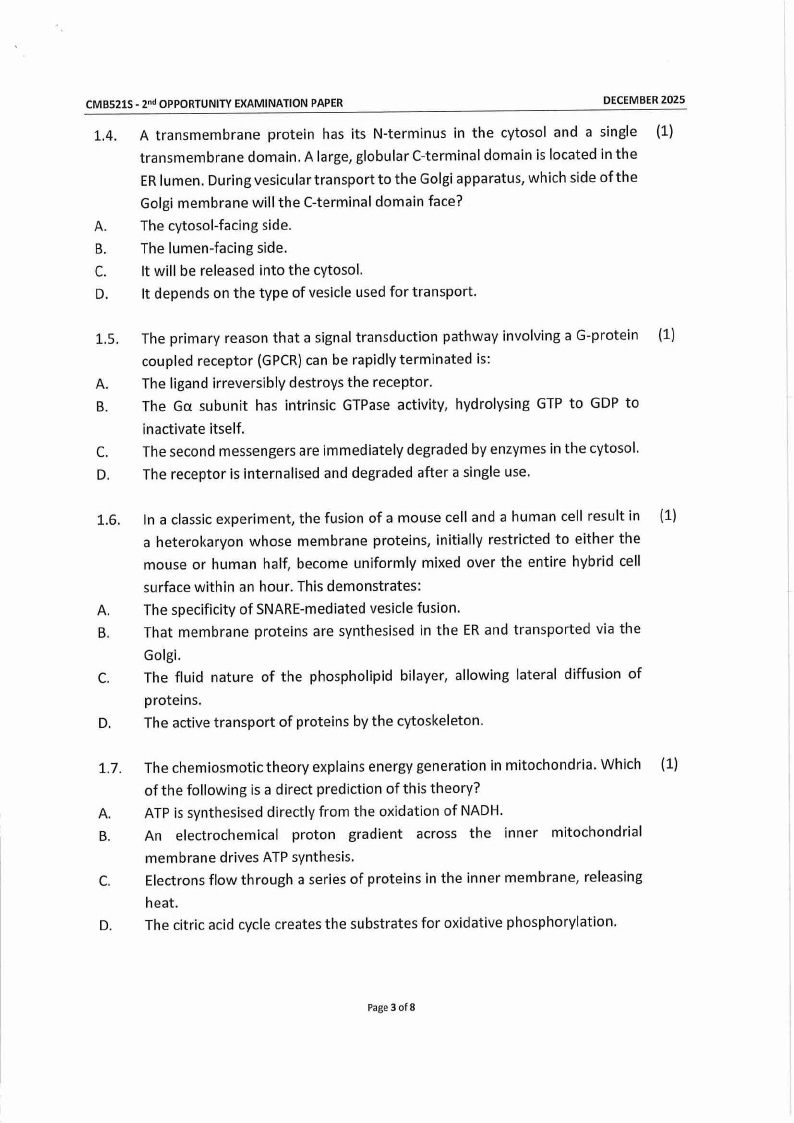
CMBS21S - 2nd OPPORTUNITY EXAMINATION PAPER
DECEMBER 2025
1.4. A transmembrane protein has its N-terminus in the cytosol and a single (1)
transmembrane domain. A large, globular C-terminal domain is located in the
ER lumen. During vesicular transport to the Golgi apparatus, which side of the
Golgi membrane will the C-terminal domain face?
A. The cytosol-facing side.
B. The lumen-facing side.
C. It will be released into the cytosol.
D. It depends on the type of vesicle used for transport.
1.5. The primary reason that a signal transduction pathway involving a G-protein (1)
coupled receptor (GPCR) can be rapidly terminated is:
A. The ligand irreversibly destroys the receptor.
B. The Ga subunit has intrinsic GTPase activity, hydrolysing GTP to GDP to
inactivate itself.
C. The second messengers are immediately degraded by enzymes in the cytosol.
D. The receptor is internalised and degraded after a single use.
1.6. In a classic experiment, the fusion of a mouse cell and a human cell result in (1)
a heterokaryon whose membrane proteins, initially restricted to either the
mouse or human half, become uniformly mixed over the entire hybrid cell
surface within an hour. This demonstrates:
A. The specificity of SNARE-mediated vesicle fusion.
B. That membrane proteins are synthesised in the ER and transported via the
Golgi.
C. The fluid nature of the phospholipid bilayer, allowing lateral diffusion of
proteins.
D. The active transport of proteins by the cytoskeleton.
1.7. The chemiosmotic theory explains energy generation in mitochondria. Which (1)
of the following is a direct prediction of this theory?
A. ATP is synthesised directly from the oxidation of NADH.
B. An electrochemical proton gradient across the inner mitochondrial
membrane drives ATP synthesis.
C. Electrons flow through a series of proteins in the inner membrane, releasing
heat.
D. The citric acid cycle creates the substrates for oxidative phosphorylation.
Page 3 of 8
|
|
4 Page 4 |
▲back to top |
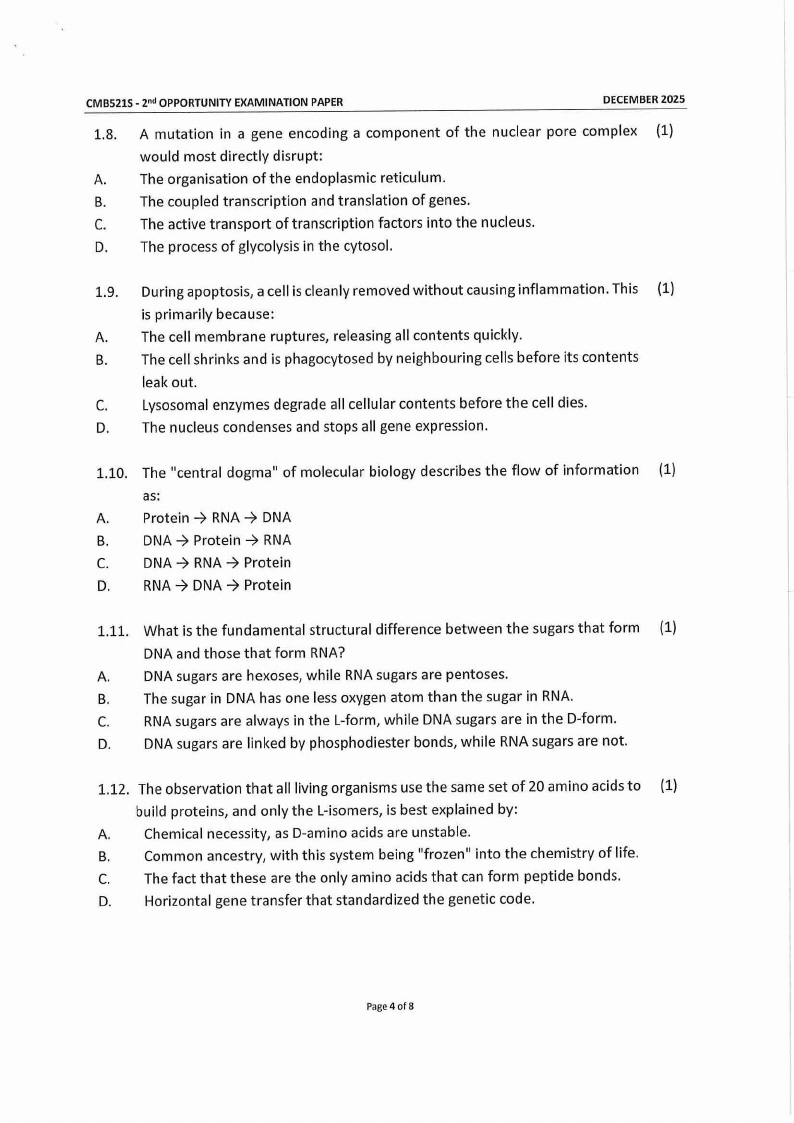
CMB521S - 2nd OPPORTUNITY EXAMINATION PAPER
DECEMBER 2025
1.8. A mutation in a gene encoding a component of the nuclear pore complex (1}
would most directly disrupt:
A. The organisation of the endoplasmic reticulum.
B. The coupled transcription and translation of genes.
C. The active transport of transcription factors into the nucleus.
D. The process of glycolysis in the cytosol.
1.9. During apoptosis, a cell is cleanly removed without causing inflammation. This (1}
is primarily because:
A. The cell membrane ruptures, releasing all contents quickly.
B. The cell shrinks and is phagocytosed by neighbouring cells before its contents
leak out.
C. Lysosomal enzymes degrade all cellular contents before the cell dies.
D. The nucleus condenses and stops all gene expression.
1.10. The "central dogma" of molecular biology describes the flow of information (1)
as:
A.
Protein ➔ RNA ➔ DNA
B. DNA ➔ Protein ➔ RNA
C.
DNA ➔ RNA ➔ Protein
D. RNA ➔ DNA ➔ Protein
1.11. What is the fundamental structural difference between the sugars that form (1)
DNA and those that form RNA?
A. DNA sugars are hexoses, while RNA sugars are pentoses.
B. The sugar in DNA has one less oxygen atom than the sugar in RNA.
C. RNA sugars are always in the L-form, while DNA sugars are in the D-form.
D. DNA sugars are linked by phosphodiester bonds, while RNA sugars are not.
1.12. The observation that all living organisms use the same set of 20 amino acids to (1)
build proteins, and only the L-isomers, is best explained by:
A. Chemical necessity, as D-amino acids are unstable.
B. Common ancestry, with this system being "frozen" into the chemistry of life.
C. The fact that these are the only amino acids that can form peptide bonds.
D. Horizontal gene transfer that standard ized the genetic code.
Page 4 ofS
|
|
5 Page 5 |
▲back to top |
CMBS21S- 2nd OPPORTUNITY EXAMINATION PAPER
DECEMBER 2025
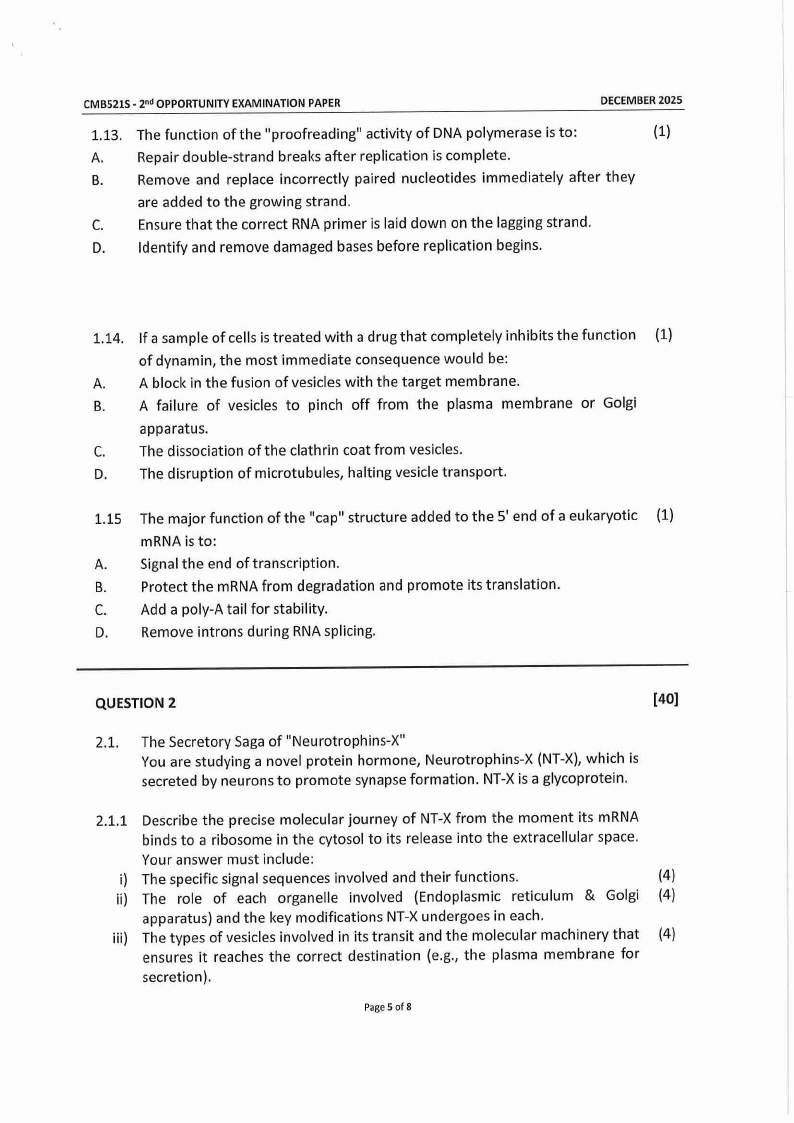
1.13. The function of the "proofreading" activity of DNA polymerase is to:
(1)
A. Repair double-strand breaks after replication is complete.
B. Remove and replace incorrectly paired nucleotides immediately after they
are added to the growing strand.
C. Ensure that the correct RNA primer is laid down on the lagging strand.
D. Identify and remove damaged bases before replication begins.
1.14. If a samp le of cells is treated with a drug that completely inhibits the function (1}
of dynamin, the most immediate consequence would be:
A. A block in the fusion of vesicles with the target membrane.
B. A failure of vesicles to pinch off from the plasma membrane or Golgi
apparatus.
C. The dissociation of the clathrin coat from vesicles.
D. The disruption of microtubules, halting vesicle transport.
1.15 The major function of the "cap" structure added to the 5' end of a eukaryotic (1)
mRNA is to:
A. Signal the end of transcription .
B. Protect the mRNA from degradation and promote its translation.
C. Add a poly-A tail for stability.
D. Remove introns during RNA splicing.
QUESTION 2
[40]
2.1. The Secretory Saga of "Neurotrophins-X"
You are studying a novel protein hormone, Neurotrophins-X (NT-X), which is
secreted by neurons to promote synapse formation. NT-X is a glycoprotein.
2.1.1 Describe the precise molecular journey of NT-X from the moment its mRNA
binds to a ribosome in the cytosol to its release into the extracellular space.
Your answer must include:
i) The specific signal sequences involved and their functions.
(4)
ii) The role of each organelle involved (Endoplasmic reticulum & Golgi (4)
apparatus) and the key modifications NT-X undergoes in each.
iii) The types of vesicles involved in its transit and the molecular machinery that (4)
ensures it reaches the correct destination (e.g., the plasma membrane for
secretion}.
Page 5 of 8
|
|
6 Page 6 |
▲back to top |
CMB521S - 2nd OPPORTUNITY EXAMINATION PAPER
DECEMBER 2025
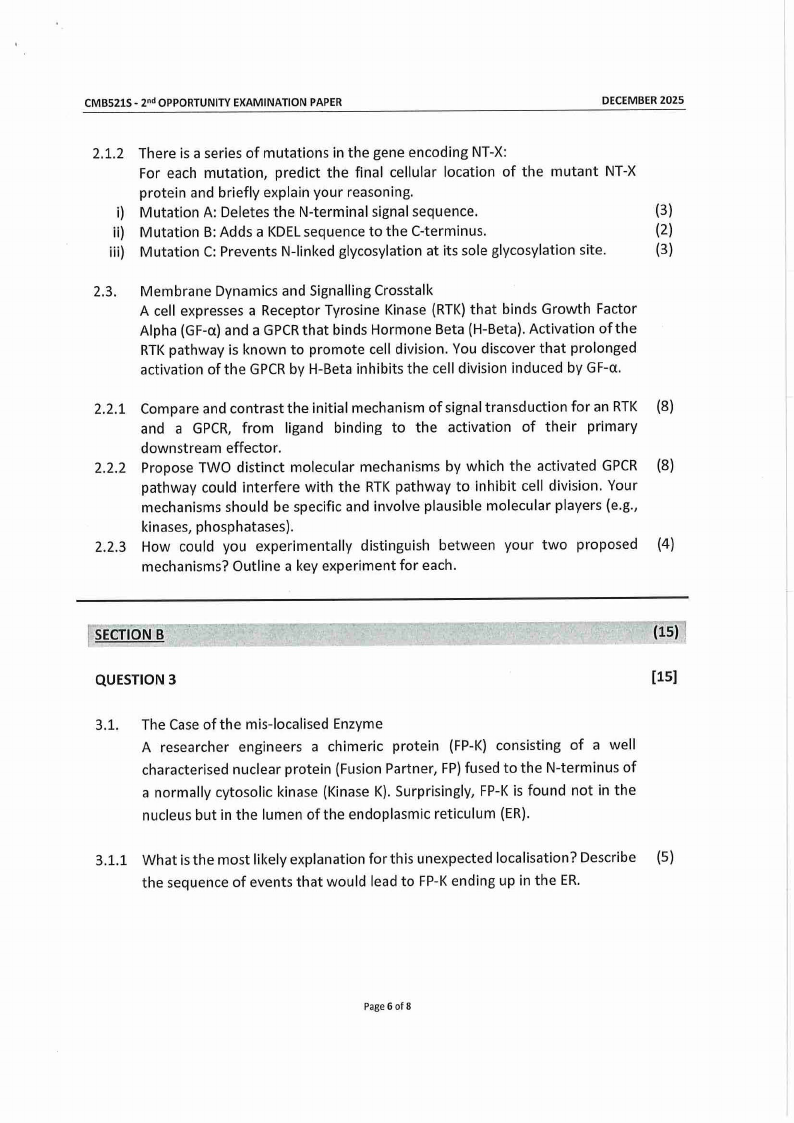
2.1.2 There is a series of mutations in the gene encoding NT-X:
For each mutation, predict the final cellular location of the mutant NT-X
protein and briefly explain your reasoning.
i) Mutation A: Deletes the N-terminal signal sequence.
(3)
ii) Mutation B: Adds a KDEL sequence to the C-terminus.
(2)
iii) Mutation C: Prevents N-linked glycosylation at its sole glycosylation site.
(3)
2.3. Membrane Dynamics and Signalling Crosstalk
A cell expresses a Receptor Tyrosine Kinase (RTK) that binds Growth Factor
Alpha (GF-a) and a GPCR that binds Hormone Beta (H-Beta). Activation of the
RTK pathway is known to promote cell division. You discover that prolonged
activation of the GPCR by H-Beta inhibits the cell division induced by GF-a.
2.2.1 Compare and contrast the initial mechanism of signal transduction for an RTK (8)
and a GPCR, from ligand binding to the activation of their primary
downstream effector.
2.2.2 Propose TWO distinct molecular mechanisms by which the activated GPCR (8)
pathway could interfere with the RTK pathway to inhibit cell division. Your
mechanisms should be specific and involve plausible molecular players (e.g.,
kinases, phosphatases).
2.2.3 How could you experimentally distinguish between your two proposed (4)
mechanisms? Outline a key experiment for each.
SECTION B
(15)
QUESTION 3
(15]
3.1. The Case of the mis-localised Enzyme
A researcher engineers a chimeric protein (FP-K) consisting of a well
characterised nuclear protein (Fusion Partner, FP) fused to the N-terminus of
a normally cytosolic kinase (Kinase K). Surprisingly, FP-K is found not in the
nucleus but in the lumen of the endoplasmic reticulum (ER).
3.1.1 What is the most likely explanation forth is unexpected localisation? Describe (5)
the sequence of events that would lead to FP-K ending up in the ER.
Page 6 of 8
|
|
7 Page 7 |
▲back to top |
CMB521S - 2nd OPPORTUNITY EXAMINATION PAPER
DECEMBER 2025
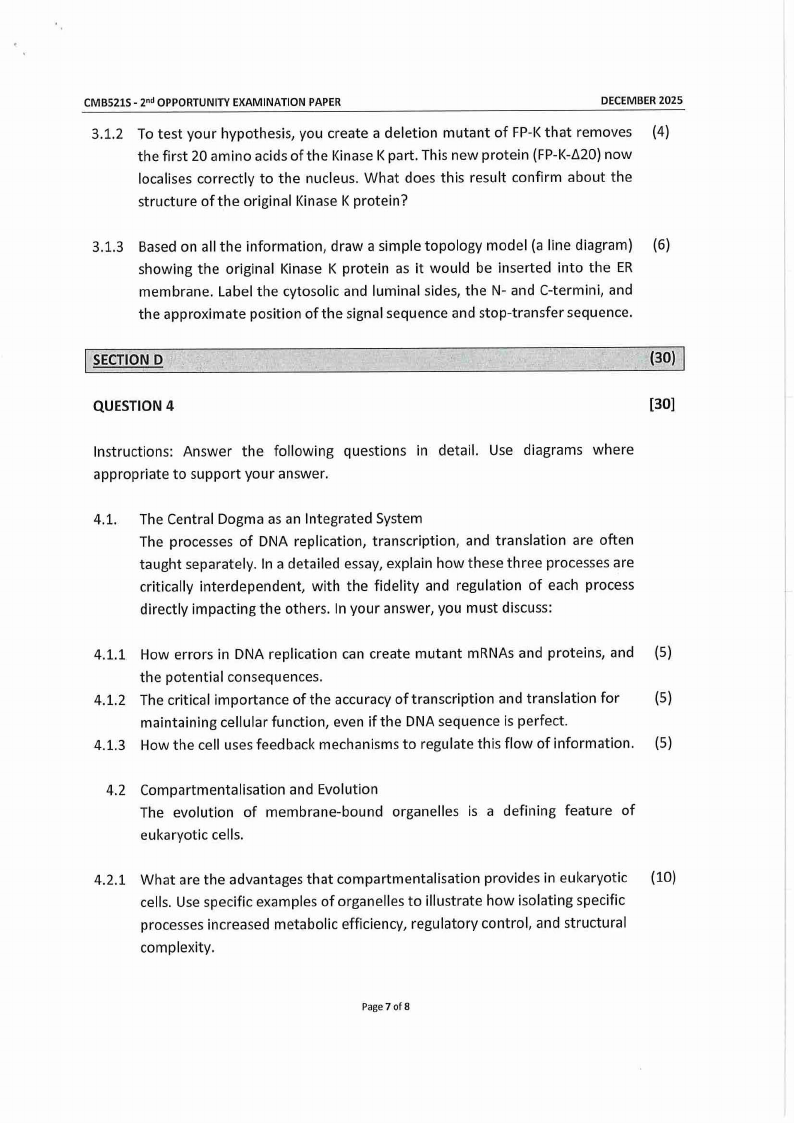
3.1.2 To test your hypothesis, you create a deletion mutant of FP-K that removes (4)
the first 20 amino acids of the Kinase K part. This new protein (FP-K-ll20) now
localises correctly to the nucleus. What does this result confirm about the
structure of the original Kinase K protein?
3.1.3 Based on all the information, draw a simple topology model (a line diagram) (6)
showing the original Kinase K protein as it would be inserted into the ER
membrane. Label the cytosolic and luminal sides, the N- and C-termini, and
the approximate position of the signal sequence and stop-transfer sequence.
I SECTION D
(3o) 1
QUESTION 4
[30]
Instructions: Answer the following questions in detail. Use diagrams where
appropriate to support your answer.
4.1. The Central Dogma as an Integrated System
The processes of DNA replication, transcription, and translation are often
taught separately. In a detailed essay, explain how these three processes are
critically interdependent, with the fidelity and regulation of each process
directly impacting the others. In your answer, you must discuss:
4.1.1 How errors in DNA replication can create mutant mRNAs and proteins, and (5)
the potential consequences.
4.1.2 The critical importance of the accuracy of transcription and translation for (5)
maintaining cellular function, even if the DNA sequence is perfect.
4.1.3 How the cell uses feedback mechanisms to regulate this flow of information. (5)
4.2 Compartmentalisation and Evolution
The evolution of membrane-bound organelles is a defining feature of
eukaryotic cells.
4.2.1 What are the advantages that compartmentalisation provides in eukaryotic (10)
cells. Use specific examples of organelles to illustrate how isolating specific
processes increased metabolic efficiency, regulatory control, and structural
complexity.
Page 7 of 8
|
|
8 Page 8 |
▲back to top |
CMB521S - 2nd OPPORTUNITY EXAMINATION PAPER
DECEMBER 2025
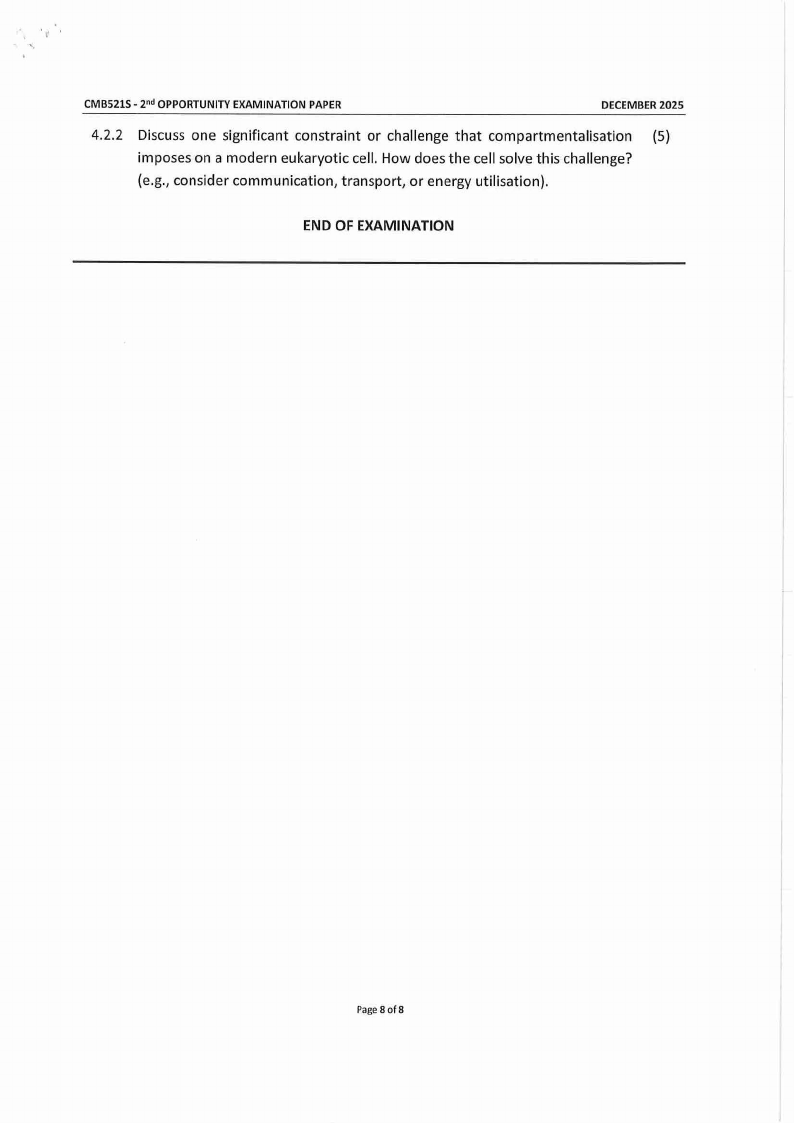
4.2.2 Discuss one significant constraint or challenge that compartmentalisation (5)
imposes on a modern eukaryotic cell. How does the cell solve this challenge?
(e.g., con sider communication, transport, or energy utilisation).
END OF EXAMINATION
Page 8 of s