CLC621S - CLINICAL CHEMISTRY 2B - 2ND OPP - DEC 2025


CLC621S - CLINICAL CHEMISTRY 2B - 2ND OPP - DEC 2025


1 Page 1

▲back to top


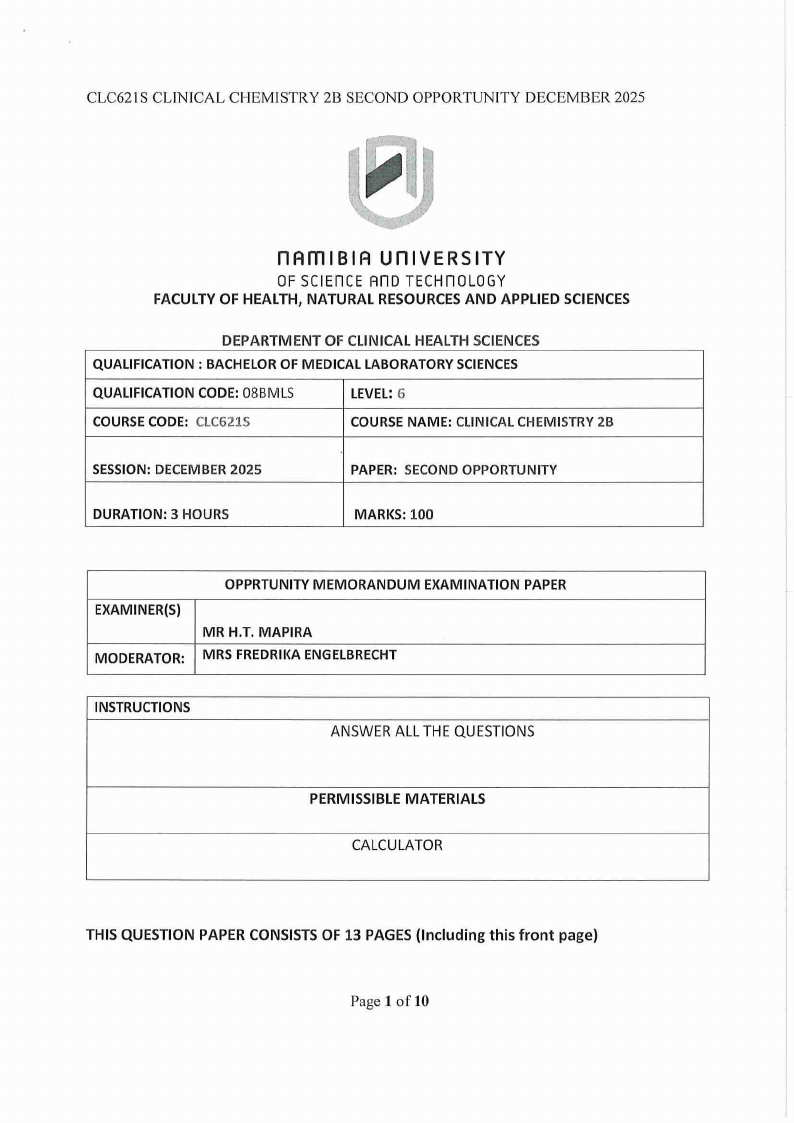
CLC62 IS CLINICAL CHEMISTRY 2B SECOND OPPORTUNITY DECEMBER 2025
nAmlBIA unlVERSITY
OF SCIEnCE Ano TECHnOLOGY
FACULTY OF HEALTH, NATURAL RESOURCES AND APPLIED SCIENCES
DEPARTM ENT OF CLINICAL HEALTH SCIENCES
QUALIFICATION: BACHELOR OF MEDICAL LABORATORY SCIENCES
QUALIFICATION CODE: 08 BMLS
LEVEL: 6
COURSE CODE: CLC621S
COURSE NAME: CLINICA L CHEMISTRY 2 B
SESSION : DECEMBER 2025
PAPER: SECOND OPPORTUNITY
DURATION: 3 HOURS
MARKS: 100
OPPRTUNITY MEMORANDUM EXAMINATION PAPER
EXAMINER{S)
MODERATOR:
MR H.T. MAPIRA
MRS FREDRll<A ENGELBRECHT
INSTRUCTIONS
ANSWER ALL THE QUESTIONS
PERMISSIBLE MATERIALS
CALCULATOR
THIS QUESTION PAPER CONSISTS OF 13 PAGES (Including this front page)
Page 1 of 10

2 Page 2

▲back to top


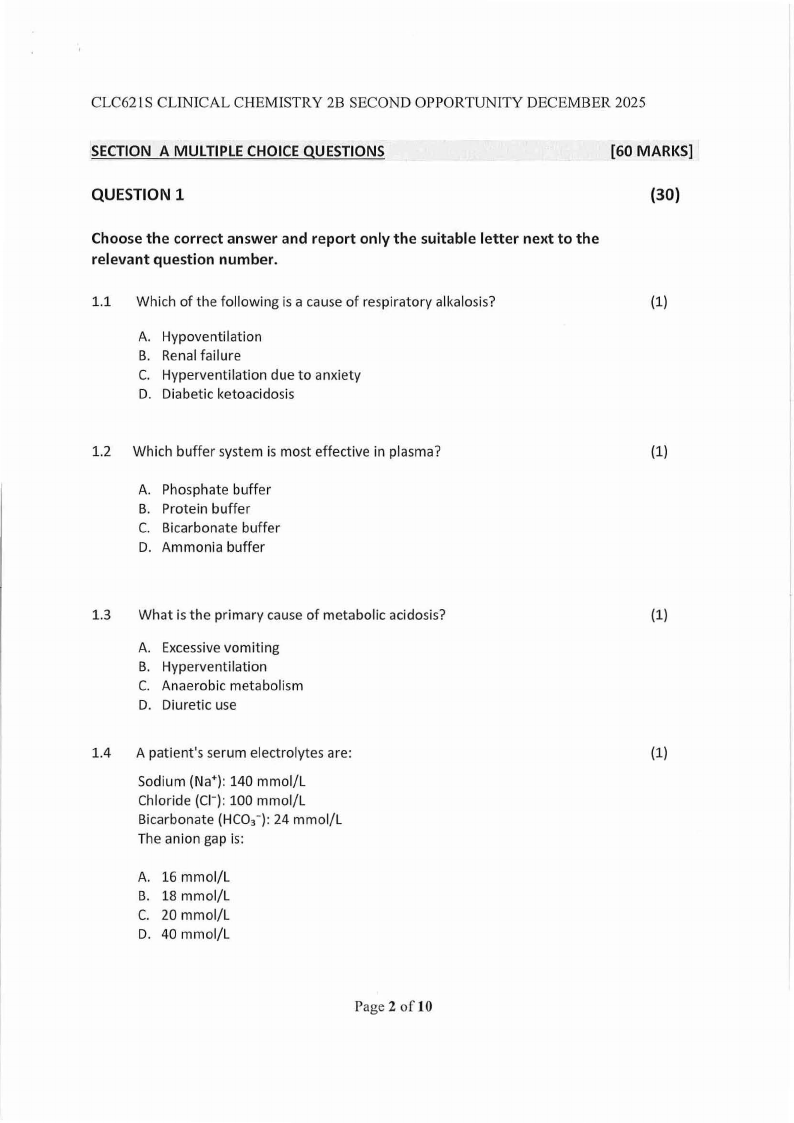
CLC621S CLINICAL CHEMISTRY 2B SECOND OPPORTUNITY DECEMBER 2025
SECTION A MULTIPLE CHOICE QUESTIONS
[60 MARKS]
QUESTION 1
{30)
Choose the correct answer and report only the suitable letter next to the
relevant question number.
1.1 Which of the following is a cause of respiratory alkalosis?
(1)
A. Hypoventilation
B. Renal failure
C. Hyperventilation due to anxiety
D. Diabetic ketoacidosis
1.2 Which buffer system is most effective in plasma?
(1)
A. Phosphate buffer
B. Protein buffer
C. Bicarbonate buffer
D. Ammonia buffer
1.3 What is the primary cause of metabolic acidosis?
(1)
A. Excessive vomiting
B. Hyperventilation
C. Anaerobic metabolism
D. Diuretic use
1.4 A patient's serum electrolytes are:
(1)
Sodium (N a•): 140 mmol/L
Chloride (Ci-): 100 mmol/L
Bicarbonate (HCO3- ): 24 mmol/L
The anion gap is:
A. 16 mmol/L
B. 18 mmol/L
C. 20 mmol/ L
D. 40 mmol/L
Page 2 of 10

3 Page 3

▲back to top


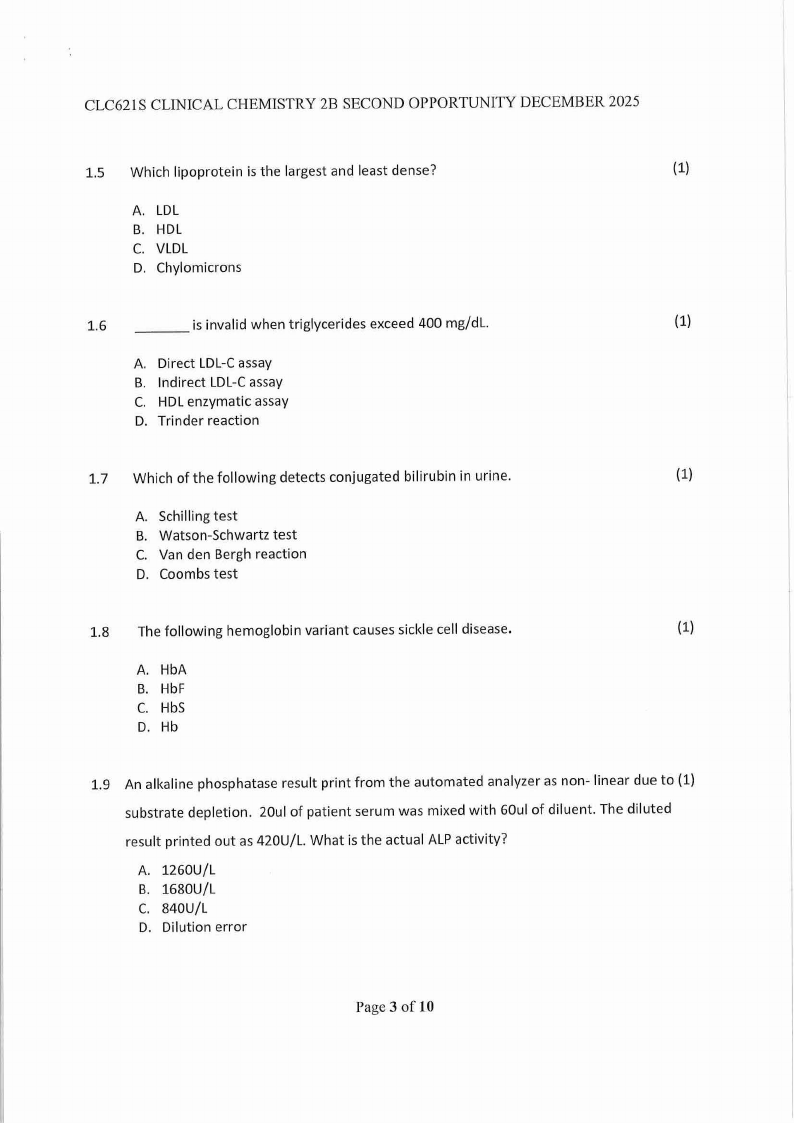
CLC621S CLINICAL CHEMISTRY 2B SECOND OPPORTUNITY DECEMBER 2025
1.5 Which lipoprotein is the largest and least dense?
(1)
A. LDL
B. HDL
C. VLDL
D. Chylomicrons
1.6 _ _ _ is invalid when triglycerides exceed 400 mg/dL.
(1)
A. Direct LDL-C assay
B. Indirect LDL-C assay
C. HDL enzymatic assay
D. Trinder reaction
1.7 Which of the following detects conjugated bilirubin in urine.
(1)
A. Schilling test
B. Watson-Schwartz test
C. Van den Bergh reaction
D. Coombs test
1.8 The following hemoglobin variant causes sickle cell disease.
(1)
A. HbA
B. HbF
C. HbS
D. Hb
1.9 An alkaline phosphatase result print from the automated analyzer as non- linear due to (1)
substrate depletion. 20ul of patient serum was mixed with 60ul of diluent. The diluted
result printed out as 420U/L. What is the actual ALP activity?
A. 1260U/L
B. 1680U/L
C. 840U/L
D. Dilution error
Page 3 of 10

4 Page 4

▲back to top


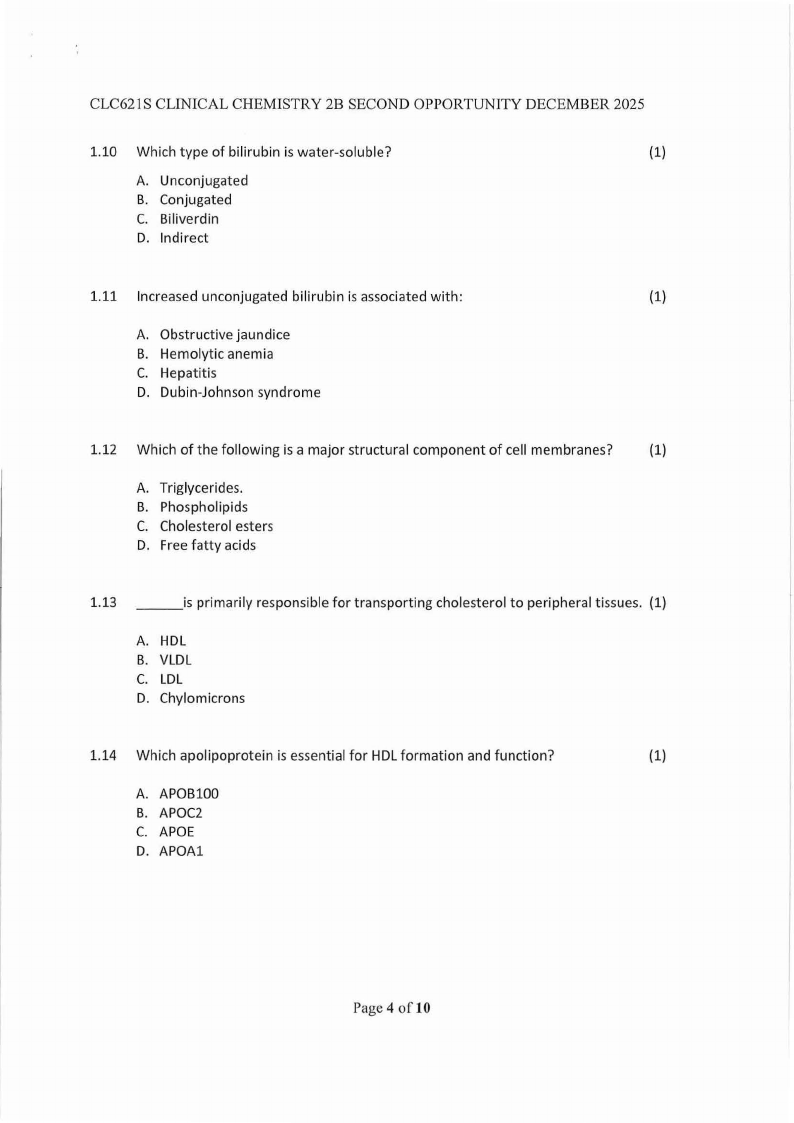
CLC621S CLINICAL CHEMISTRY 2B SECOND OPPORTUNITY DECEMBER 2025
1.10 Which type of bilirubin is water-soluble?
(1)
A. Unconjugated
B. Conjugated
C. Biliverdin
D. Indirect
1.11 Increased unconjugated bilirubin is associated with:
(1)
A. Obstructive jaundice
B. Hemolytic anemia
C. Hepatitis
D. Dubin-Johnson syndrome
1.12 Which of the following is a major structural component of cell membranes?
(1)
A. Triglycerides.
B. Phospholipids
C. Cholesterol esters
D. Free fatty acids
1.13 _ __is primarily responsible for transporting cholesterol to peripheral tissues. (1)
A. HDL
B. VLDL
C. LDL
D. Chylomicrons
1.14 Which apolipoprotein is essential for HDL formation and function?
(1)
A. APOBlO0
B. APOC2
C. APOE
D. APOAl
Page 4 of 10

5 Page 5

▲back to top


CLC621S CLINICAL CHEMISTRY 2B SECOND OPPORTUN1TY DECEMBER 2025
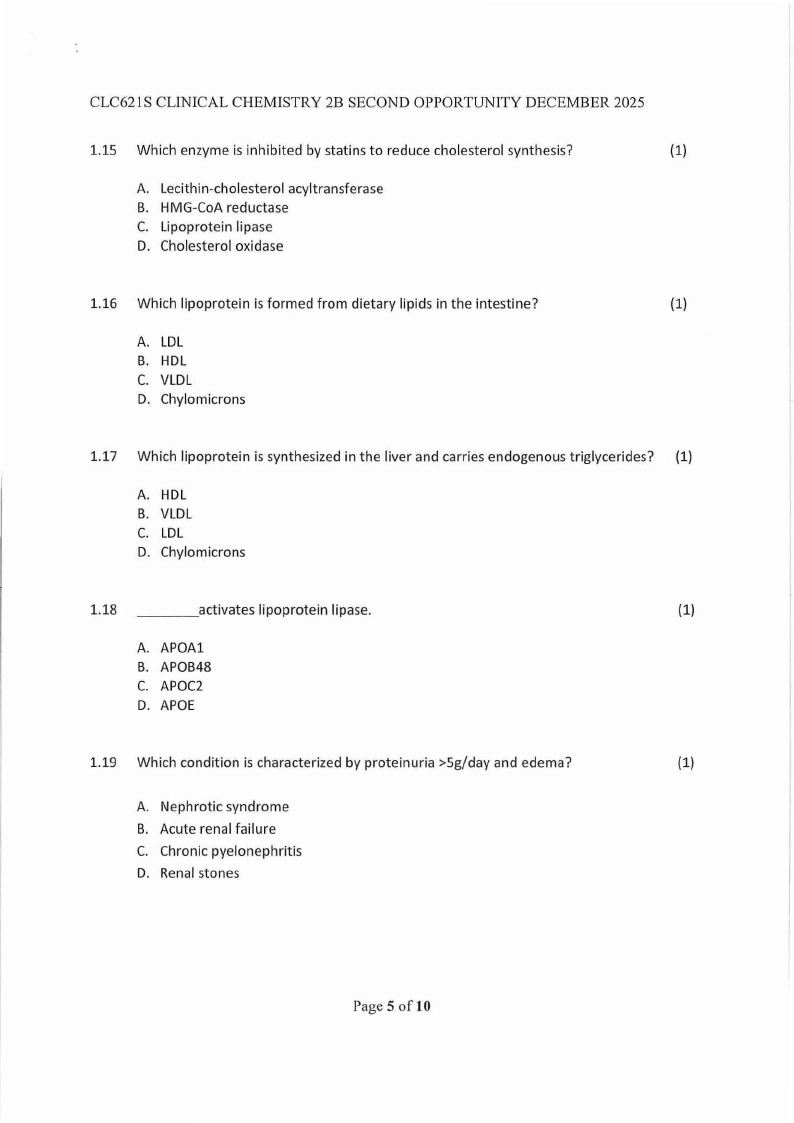
1.15 Which enzyme is inhibited by statins to reduce cholesterol synthesis?
(1)
A. Lecithin-cholesterol acyltransferase
B. HMG-CoA reductase
C. Lipoprotein lipase
D. Cholesterol oxidase
1.16 Which lipoprotein is form ed from dietary lipids in the intestine?
(1)
A. LDL
B. HDL
C. VLDL
D. Chylomicrons
1.17 Which lipoprotein is synthesized in the liver and carries endogenous triglycerides? (1)
A. HDL
B. VLDL
C. LDL
D. Chylomicrons
1.18
activates lipoprotein lipase.
(1)
A. APOA1
B. APOB48
C. APOC2
D. APOE
1.19 Which condit ion is characterized by proteinuria >Sg/day and edema?
(1)
A. Nephrotic syndrome
B. Acute renal failure
C. Chronic pyelonephritis
D. Renal stones
Page 5 of 10

6 Page 6

▲back to top


CLC621S CLINICAL CHEMISTRY 2B SECOND OPPORTUNITY DECEMBER 2025
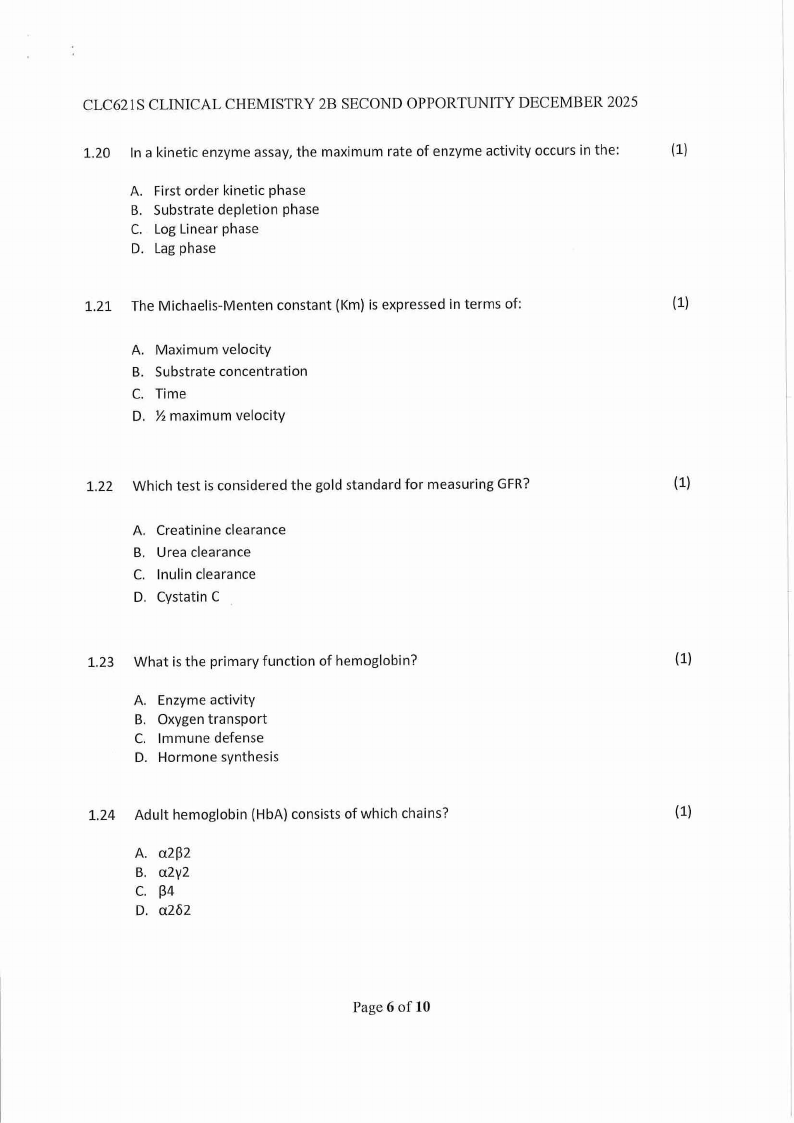
1.20 In a kinetic enzyme assay, the maximum rate of enzyme activity occurs in the:
(1)
A. First order kinetic phase
B. Substrate depletion phase
C. Log Linear phase
D. Lag phase
1.21 The Michaelis-Menten constant (Km) is expressed in terms of:
(1)
A. Maximum velocity
B. Substrate concentration
C. Time
D. ½ maximum velocity
1.22 Which test is considered the gold standard for measuring GFR?
(1)
A. Creatinine clearance
B. Urea clearance
C. lnulin clearance
D. Cystatin C
1.23 What is the primary function of hemoglobin?
(1)
A. Enzyme activity
B. Oxygen transport
C. Immune defense
D. Hormone synthesis
1.24 Adult hemoglobin (HbA) consists of which chains?
(1)
A. a2~2
B. a2y2
C. ~4
D. a2c52
Page 6 of 10

7 Page 7

▲back to top


CLC621S CLINICAL CHEMISTRY 2B SECOND OPPORTUNITY DECEMBER 2025
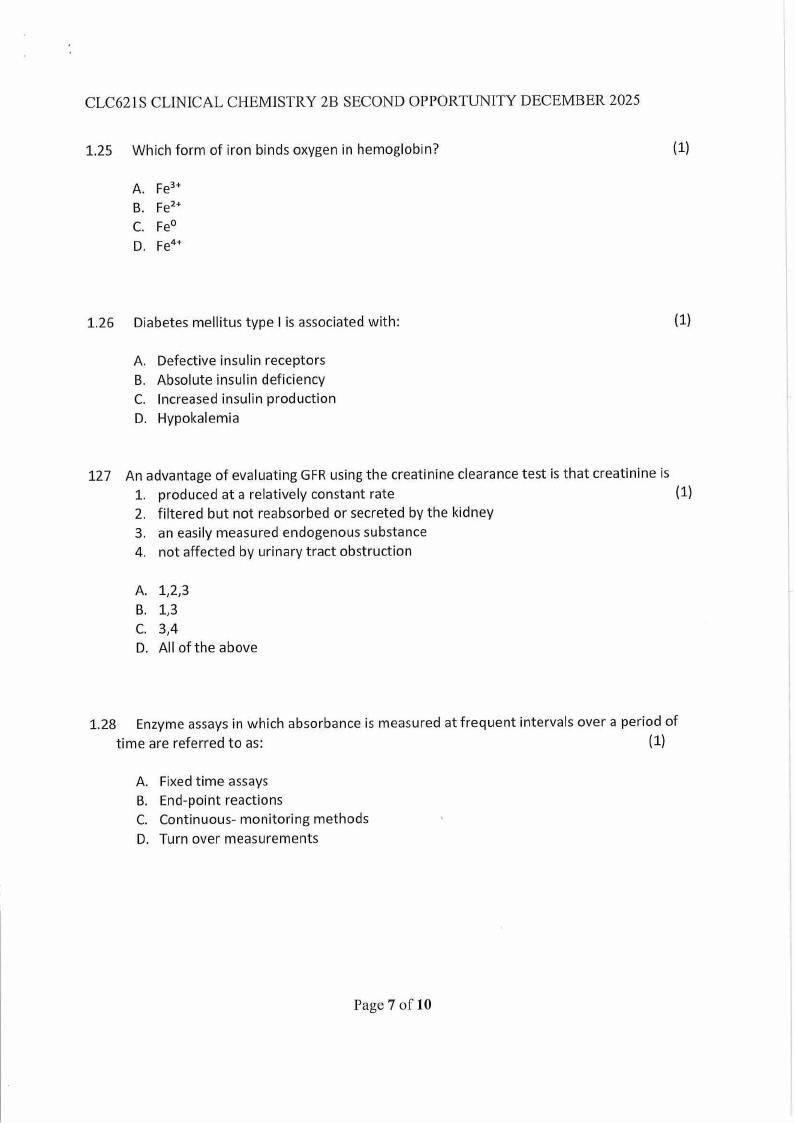
1.25 Which form of iron binds oxygen in hemoglobin?
{1)
A. Fe3+
B. Fe2+
C. Fe0
D. Fe4+
1.26 Diabetes mellitus type I is associated with:
{1)
A. Defective insulin receptors
B. Absolute insulin deficiency
C. Increased insulin production
D. Hypokalemia
127 An advantage of evaluating GFR using the creatinine clearance test is that creatinine is
1. produced at a relatively constant rate
(1)
2. filtered but not reabsorbed or secreted by the kidney
3. an easily measured endogenous substance
4. not affected by urinary tract obstruction
A. 1,2,3
B. 1,3
C. 3,4
D. All of the above
1.28 Enzyme assays in which absorbance is measured at frequent intervals over a period of
time are referred to as:
(1)
A. Fixed time assays
B. End-point reactions
C. Continuous- monitoring methods
D. Turn over measurements
Page 7 of 10

8 Page 8

▲back to top


CLC621S CLINICAL CHEMISTRY 2B SECOND OPPORTUNITY DECEMBER 2025
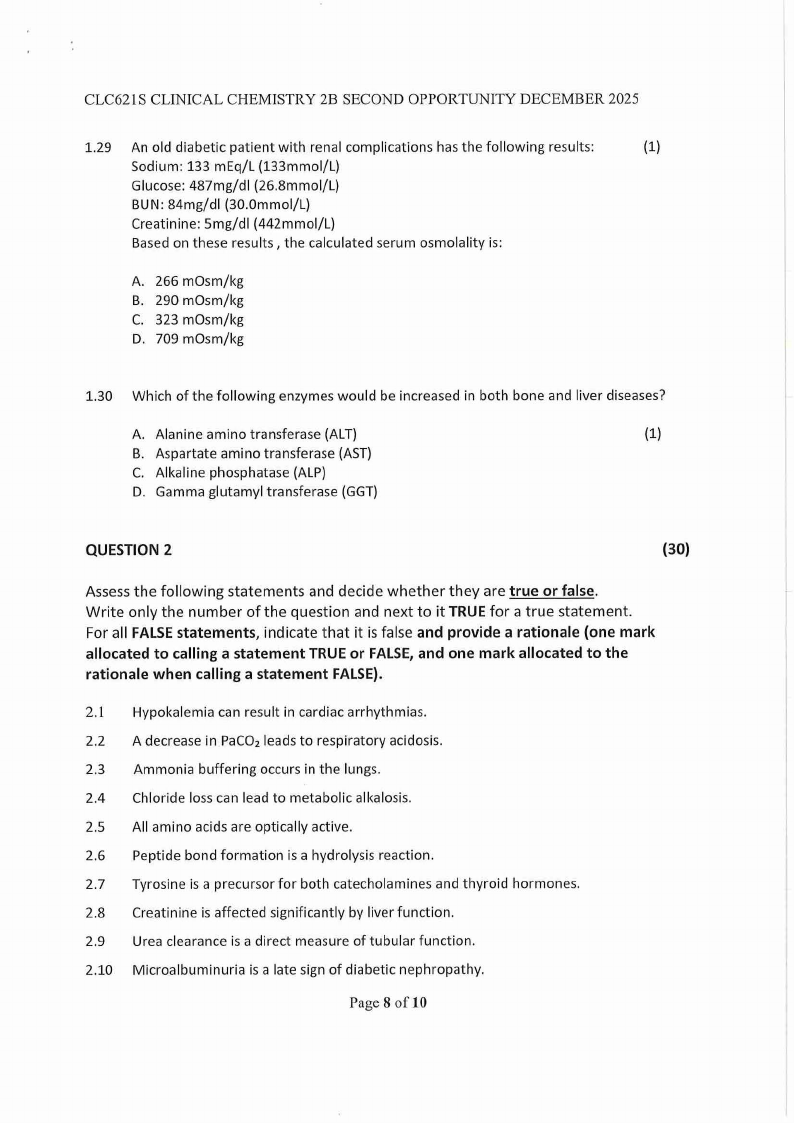
1.29 An old diabetic patient with renal complications has the following results:
(1)
Sodium: 133 mEq/L (133mmol/L)
Glucose: 487mg/dl (26.8mmol/L)
BUN: 84mg/dl (30.0mmol/L)
Creatinine: Smg/dl (442mmol/L)
Based on these results, the calculated serum osmolality is:
A. 266 mOsm/kg
B. 290 mOsm/kg
C. 323 mOsm/kg
D. 709 mOsm/kg
1.30 Which of the following enzymes would be increased in both bone and liver diseases?
A. Alanine aminotransferase (ALT)
(1)
B. Aspartate aminotransferase (AST)
C. Alkaline phosphatase (ALP)
D. Gamma glutamyl transferase (GGT)
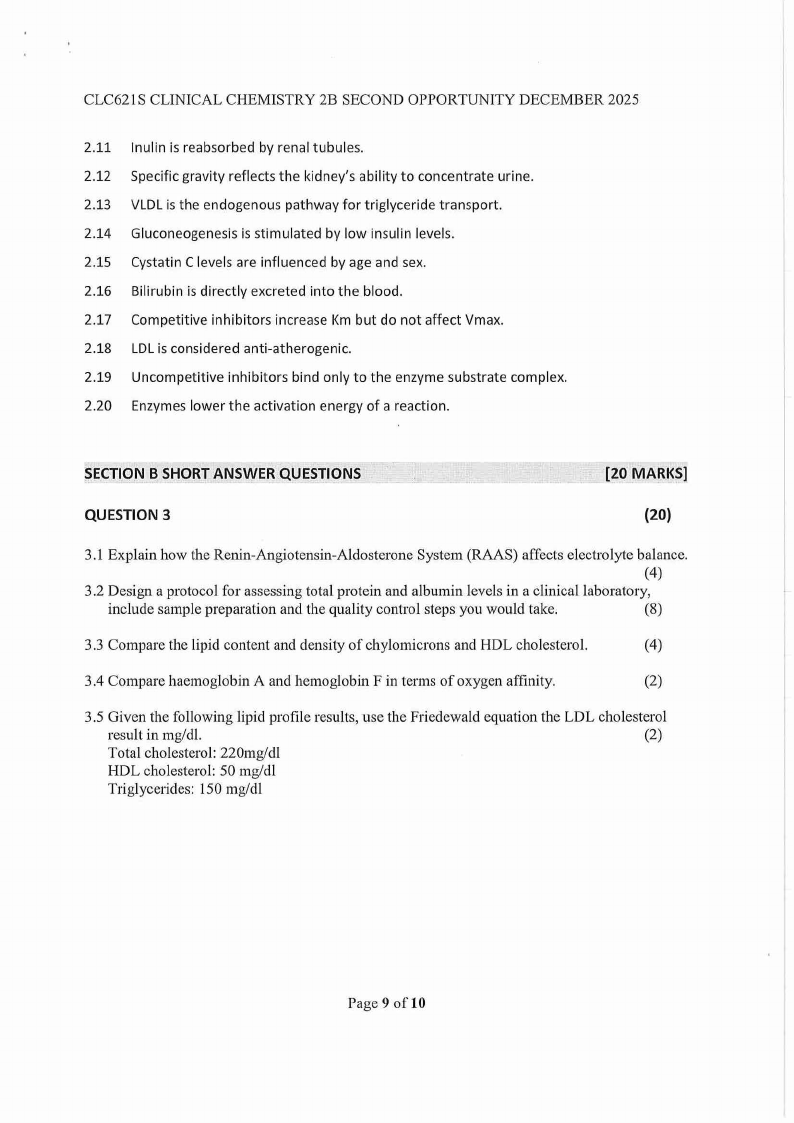
QUESTION 2
(30)
Assess the following statements and decide whether they are true or false.
Write only the number of the question and next to it TRUE for a true statement.
For all FALSE statements, indicate that it is false and provide a rationale (one mark
allocated to calling a statement TRUE or FALSE, and one mark allocated to the
rationale when calling a statement FALSE).
2.1 Hypokalemia can result in cardiac arrhythmias.
2.2 A decrease in PaCO2 leads to respiratory acidosis.
2.3 Ammonia buffering occurs in the lungs.
2.4 Chloride loss can lead to metabolic alkalosis.
2.5 All amino acids are optically active.
2.6 Peptide bond formation is a hydrolysis reaction.
2.7 Tyrosine is a precursor for both catecholamines and thyroid hormones.
2.8 Creatinine is affected significantly by liver function .
2.9 Urea clearance is a direct measure of tubular function .
2.10 Microalbuminuria is a late sign of diabetic nephropathy.
Page 8 of 10

9 Page 9

▲back to top


CLC621S CLINICAL CHEMISTRY 2B SECOND OPPORTUNITY DECEMBER 2025
2.11 lnulin is reabsorbed by renal tubules.
2.12 Specific gravity reflects the kidney's ability to concentrate urine.
2.13 VLDL is the endogenous pathway for triglyceride transport.
2.14 Gluconeogenesis is stimulated by low insulin levels.
2.15 Cystatin C levels are influ enced by age and sex.
2.16 Bilirubin is directly excreted into the blood.
2.17 Competitive inhibitors increase Km but do not affect Vmax.
2.18 LDL is considered anti-atherogenic.
2.19 Uncompetitive inhibitors bind only to the enzyme substrate complex.
2.20 Enzymes lower the activation energy of a reaction.
SECTION B SHORT ANSWER QUESTIONS
[20 MARKS]
QUESTION 3
(20)
3.1 Explain how the Renin-Angiotensin-Aldosterone System (RAAS) affects electrolyte balance.
(4)
3.2 Design a protocol for assessing total protein and albumin levels in a clinical laboratory,
include sample preparation and the quality control steps you would take.
(8)
3.3 Compare the lipid content and density of chylomicrons and HDL cholesterol.
(4)
3.4 Compare haemoglobin A and hemoglobin Fin terms of oxygen affinity.
(2)
3.5 Given the following lipid profile results, use the Friedewald equation the LDL cholesterol
result in mg/di.
(2)
Total cholesterol: 220mg/dl
HDL cholesterol: 50 mg/dl
Triglycerides: 150 mg/di
Page 9 of 10

10 Page 10

▲back to top


CLC621 S CLINICAL CHEMISTRY 2B SECOND OPPORTUNITY DECEMBER 2025
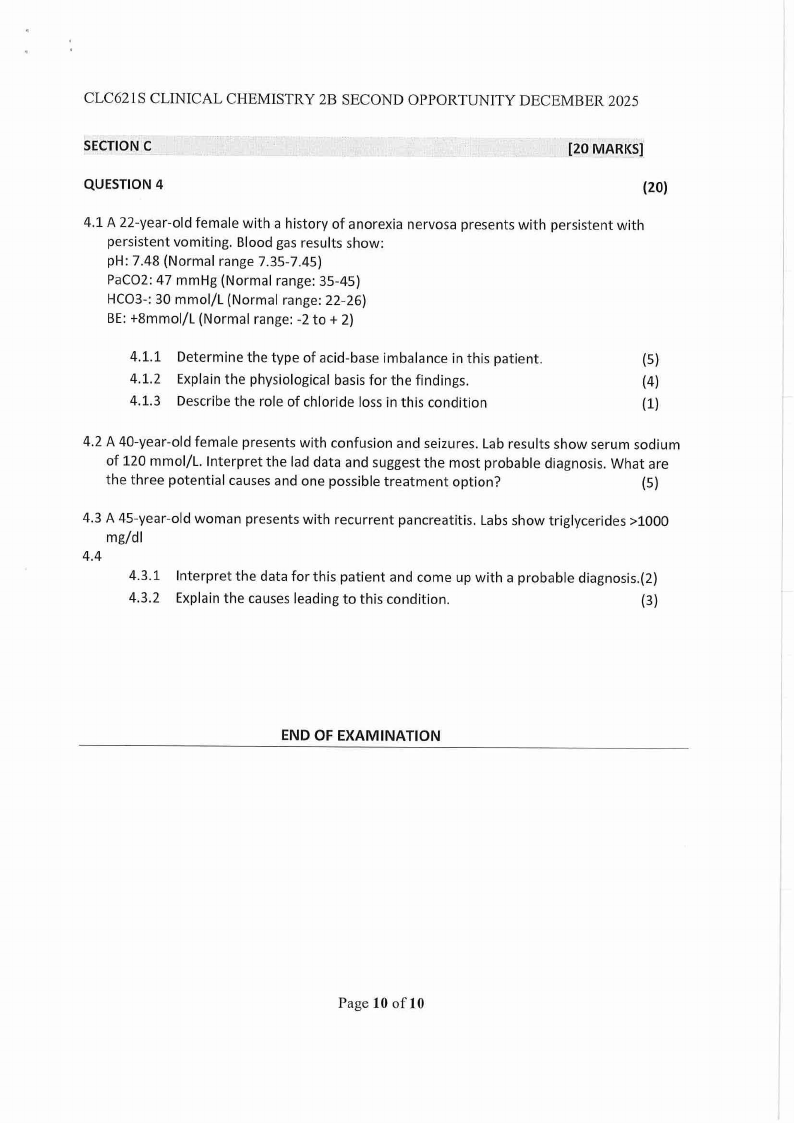
SECTION C
QUESTION 4
[20 MARKS]
(20)
4.1 A 22-year-old female with a history of anorexia nervosa presents with persistent with
persistent vomiting. Blood gas results show:
pH: 7.48 (Normal range 7.35-7.45)
PaCO2: 47 mmHg (Normal range: 35-45)
HCO3-: 30 mmol/L (Normal range: 22-26)
BE: +8mmol/L (Normal range: -2 to+ 2)
4.1.1 Determine the type of acid-base imbalance in this patient.
(5)
4.1.2 Explain the physiological basis for the findings.
(4)
4.1.3 Describe the role of chloride loss in this condition
(1)
4.2 A 40-year-old female presents with confusion and seizures. Lab results show serum sodium
of 120 mmol/L. Interpret the lad data and suggest the most probable diagnosis. What are
the three potential causes and one possible treatment option?
(5)
4.3 A 45-year-old woman presents with recurrent pancreatitis. Labs show triglycerides >1000
mg/di
4.4
4.3.1 Interpret the data for this patient and come up with a probable diagnosis.(2)
4.3.2 Explain the causes leading to this condition.
(3)
END OF EXAMINATION
Page 10 ofl0