CLC621S - CLINICAL CHEMISTRY 2B - 1ST OPP - NOV 2025


CLC621S - CLINICAL CHEMISTRY 2B - 1ST OPP - NOV 2025


1 Page 1

▲back to top


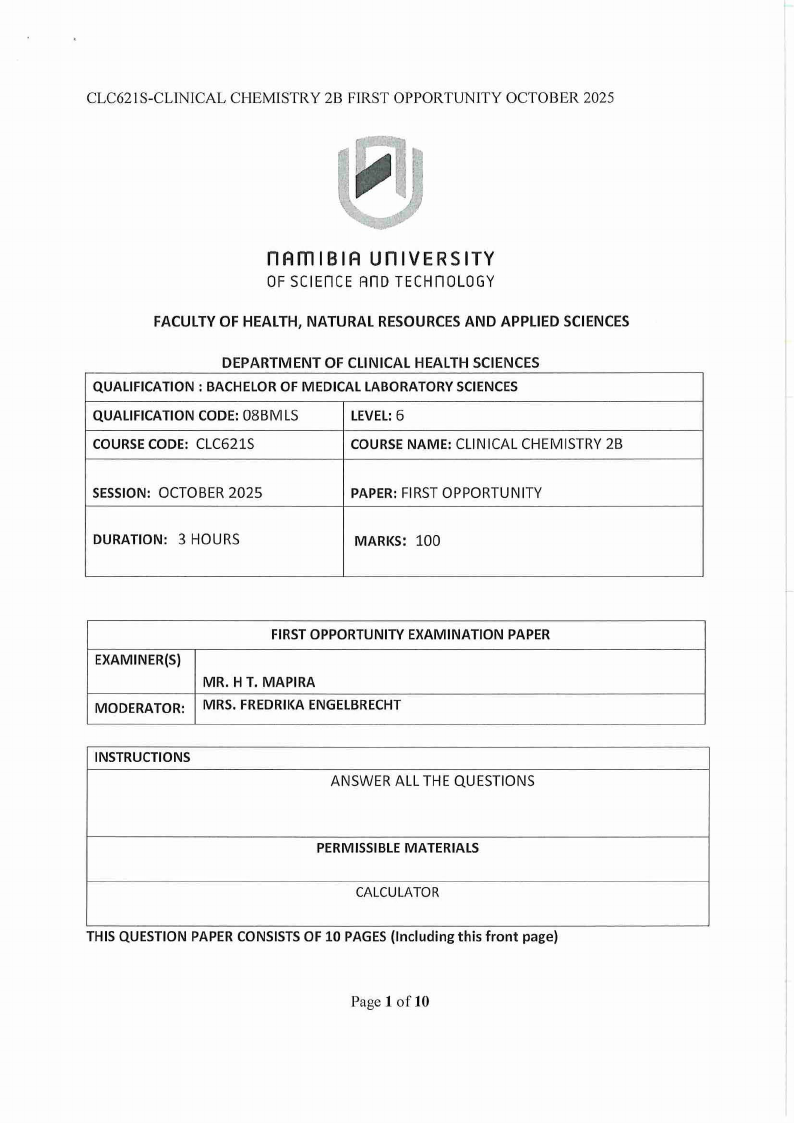
CLC62LS-CLINICAL CHEMISTRY 28 FfRST OPPORTUNITY OCTOBER 2025
n Am I BI A u n IVER s I TY
OF SCIEnCE Ano TECHnOLOGY
FACULTY OF HEALTH, NATURAL RESOURCES AND APPLIED SCIENCES
DEPARTMENT OF CLINICAL HEALTH SCIENCES
QUALIFICATION: BACHELOR OF MEDICAL LABORATORY SCIENCES
QUALIFICATION CODE: 08BMLS
LEVEL: 6
COURSE CODE: CLC621S
COURSE NAME: CLINICAL CHEMISTRY 2B
SESSION: OCTOBER 2025
PAPER: FIRST OPPORTUNITY
DURATION: 3 HOURS
MARKS: 100
EXAMINER(S)
MODERATOR:
FIRST OPPORTUNITY EXAMINATION PAPER
MR. HT. MAPIRA
MRS. FREDRIKA ENGELBRECHT
INSTRUCTIONS
ANSWER ALL THE QUESTIONS
PERMISSIBLE MATERIALS
CALCULATOR
THIS QUESTION PAPER CONSISTS OF 10 PAGES (Including this front page)
Page 1 of 10

2 Page 2

▲back to top


CLC621S-CLINICAL CHEMISTRY 2B FIRST OPPORTUNITY OCTOBER 2025
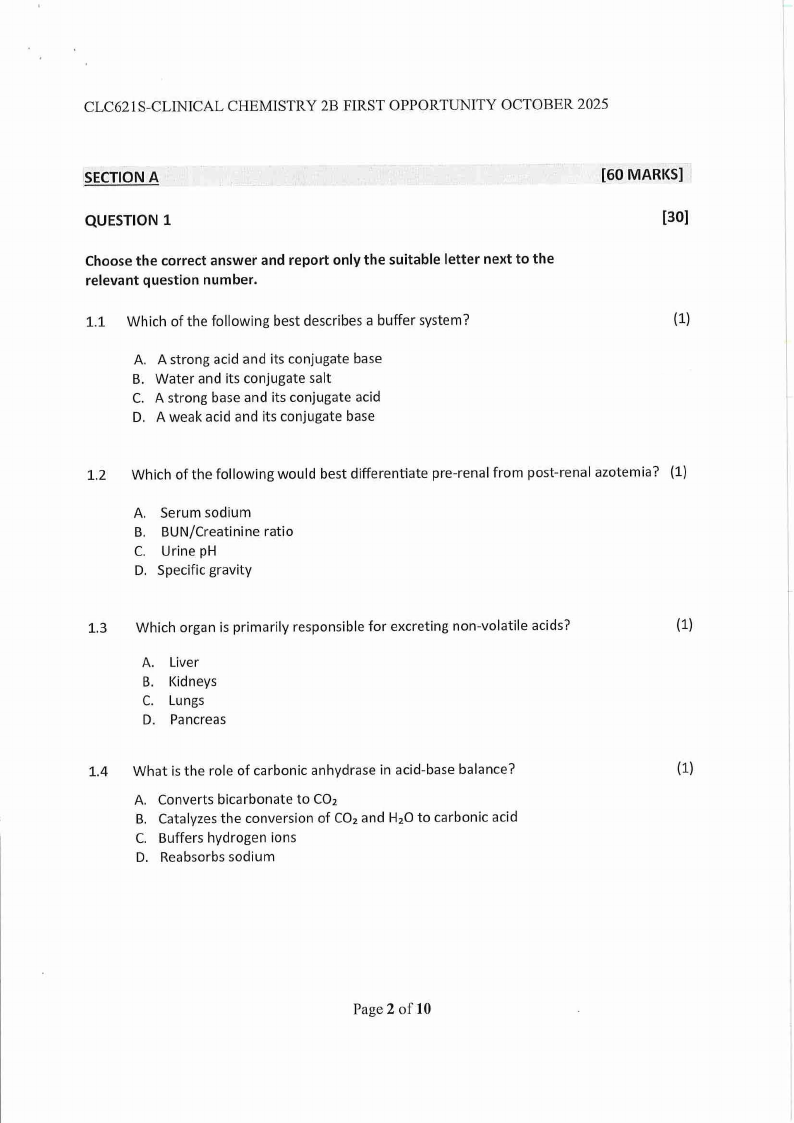
SECTION A
QUESTION 1
Choose the correct answer and report only the suitable letter next to the
relevant question number.
1.1 Which of the following best describes a buffer system?
A. A strong acid and its conjugate base
B. Water and its conjugate salt
C. A strong base and its conjugate acid
D. A weak acid and its conjugate base
[60 MARKS]
[30]
(1)
1.2 Which of the following would best differentiate pre-renal from post-renal azotemia? (1)
A. Serum sodium
B. BUN/Creatinine ratio
C. Urine pH
D. Specific gravity
1.3 Which organ is primarily responsible for excreting non-volatile acids?
(1)
A. Liver
B. Kidneys
C. Lungs
D. Pancreas
1.4 What is the role of carbonic anhydrase in acid-base balance?
(1)
A. Converts bicarbonate to CO2
B. Catalyzes the conversion of CO2 and H2O to carbonic acid
C. Buffers hydrogen ions
D. Reabsorbs sodium
Page 2 of 10

3 Page 3

▲back to top


CLC621 S-CLINICAL CHEMISTRY 2B FIRST OPPORTUNITY OCTOBER 2025
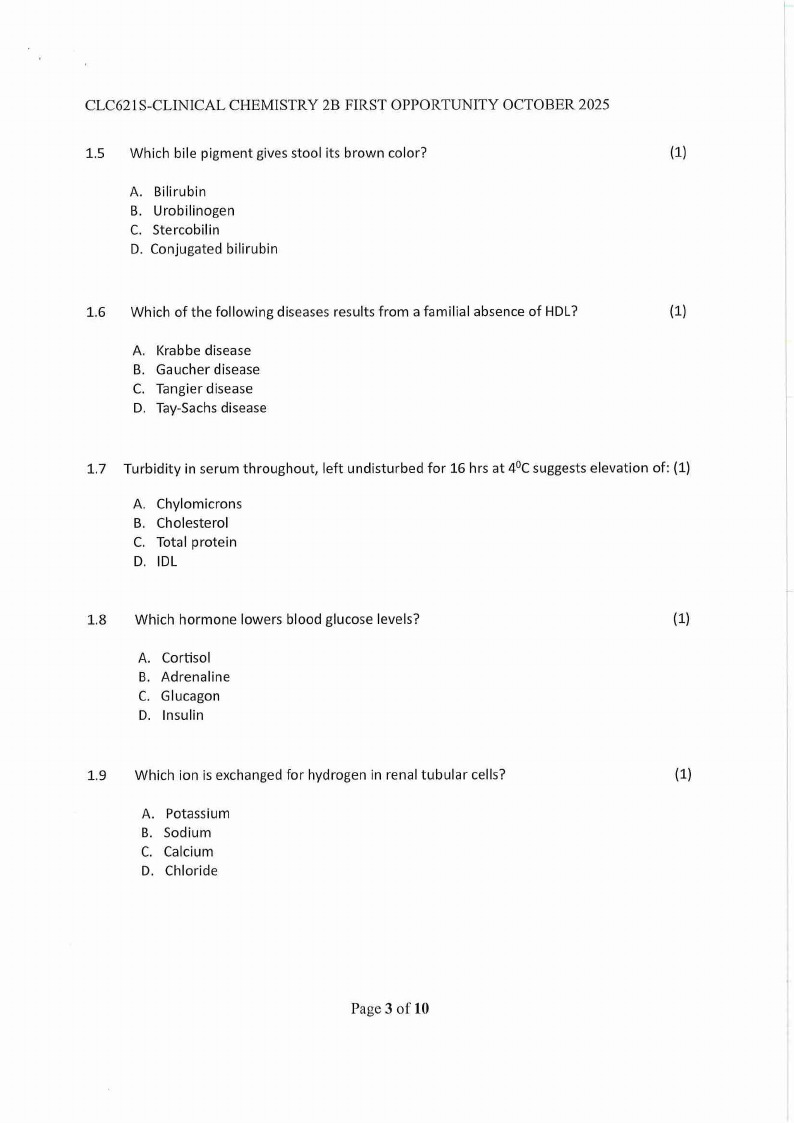
1.5 Which bile pigment gives stool its brown color?
(1)
A. 8ilirubin
8. Urobilinogen
C. Stercobilin
D. Conjugated bilirubin
1.6 Which of the fol lowing diseases results from a fami lial absence of HDL?
(1)
A. Krabbe disease
8. Gaucher disease
C. Tangier disease
D. Tay-Sachs disease
1.7 Turbidity in serum throughout, left undisturbed for 16 hrs at 4°C suggests elevation of: (1)
A. Chylom icrons
8. Cho lesterol
C. Tota l protein
D. IDL
1.8 Which hormone lowers blood glucose levels?
(1)
A. Cortiso l
8. Adrenaline
C. Glucagon
D. Insulin
1.9 Which ion is exchanged for hydrogen in rena l tubular cel ls?
(1)
A. Potassium
8. Sodium
C. Calcium
D. Chloride
Page 3 of 10

4 Page 4

▲back to top


CLC621S-CLrNICAL CHEMISTRY 2B FIRST OPPORTUNITY OCTOBER 2025
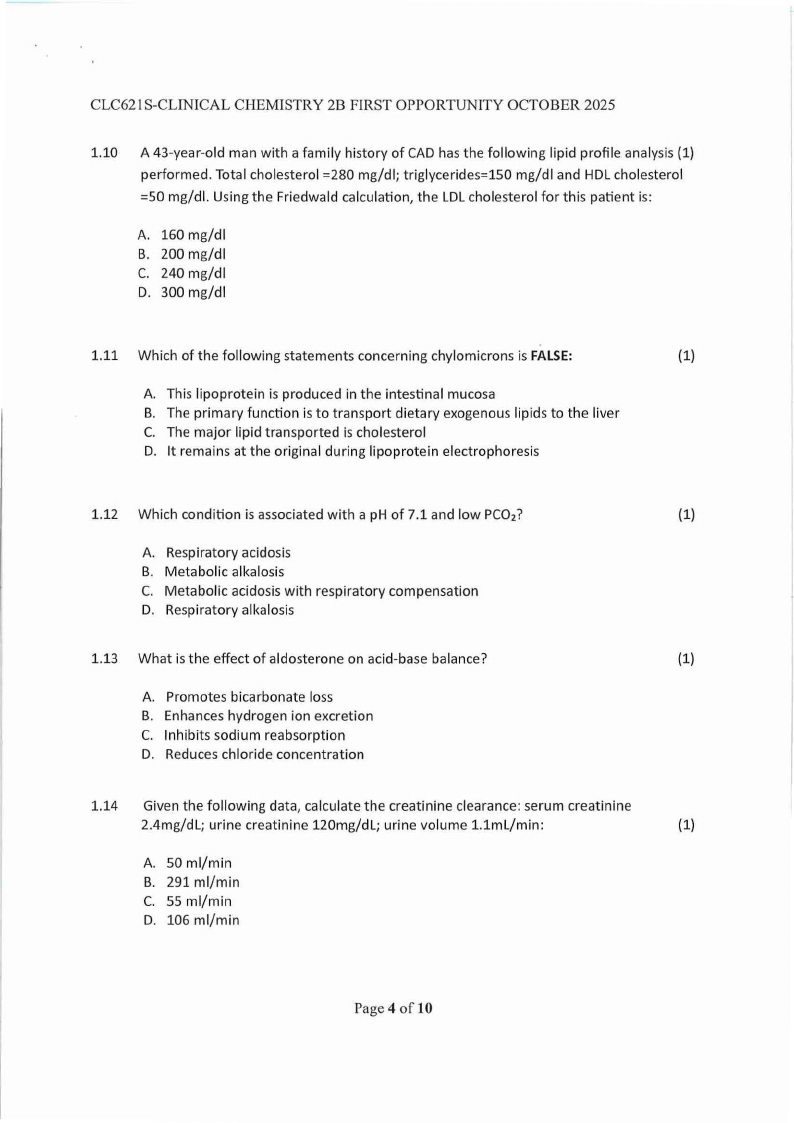
1.10 A 43-year-old man with a fa mily history of CAD has the following lipid profile ana lysis (1)
performed. Total cholesterol =280 mg/di; triglycerides=150 mg/di and HDL cholesterol
=SO mg/di. Using the Friedwald calculation, the LDL cholesterol for this patient is:
A. 160 mg/di
B. 200 mg/di
C. 240 mg/di
D. 300 mg/di
1.11 Which of the following statements concerning chylomicrons is FALSE:
(1)
A. This lipoprotein is produced in the intestinal mucosa
B. The primary f unction is to transport dietary exogenous lipids to the liver
C. The major lipid transported is cholesterol
D. It remains at the original during lipoprotein electrophoresis
1.12 Which condition is associated with a pH of 7.1 and low PCO2?
(1)
A. Respiratory acidosis
B. Metabolic alkalosis
C. Metabolic acidosis with respiratory compensation
D. Respiratory alkalosis
1.13 What is the effect of aldosterone on acid-base balance?
(1)
A. Promotes bicarbonate loss
B. Enhances hydrogen ion excretion
C. Inhibits sodium reabsorption
D. Reduces chloride concentration
1.14 Given the following data, calculate the creatinine clearance: serum creatinine
2.4mg/dL; urine creatinine 120mg/dL; urine volume 1.lml/min:
(1)
A. 50 ml/min
B. 291 ml/min
C. 55 ml/min
D. 106 ml/min
Page 4 of 10

5 Page 5

▲back to top


CLC621S-CLINICAL CHEMISTRY 2B FIRST OPPORTUNITY OCTOBER 2025
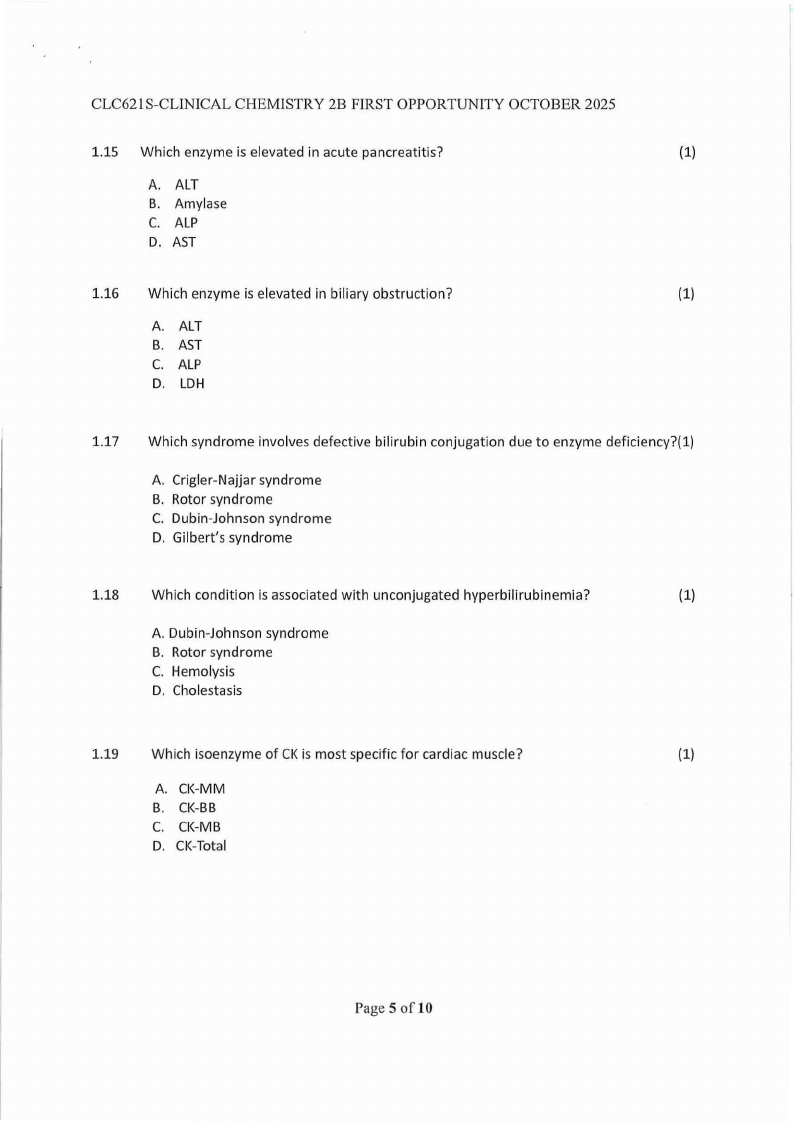
1.15 Which enzyme is elevated in acute pancreatitis?
(1)
A. ALT
B. Amylase
C. ALP
D. AST
1.16 Which enzyme is elevated in biliary obstruction?
(1)
A. ALT
B. AST
C. ALP
D. LDH
1.17 Which syndrome involves defective bilirubin conjugation due to enzyme deficiency?(!)
A. Crigler-Najjar syndrome
B. Rotor syndrome
C. Dubin-Johnson syndrome
D. Gilbert's syndrome
1.18 Which condition is associated with unconjugated hyperbilirubinemia?
(1)
A. Dubin-Johnson syndrome
B. Rotor syndrome
C. Hemolysis
D. Cholestasis
1.19 Which isoenzyme of CK is most specific for cardiac muscle?
(1)
A. CK-MM
B. CK-BB
C. CK-MB
D. CK-Total
Page 5 of 10

6 Page 6

▲back to top


CLC62 1S-CLINICAL CHEMISTRY 2B FIRST OPPORTUNITY OCTOBER 2025
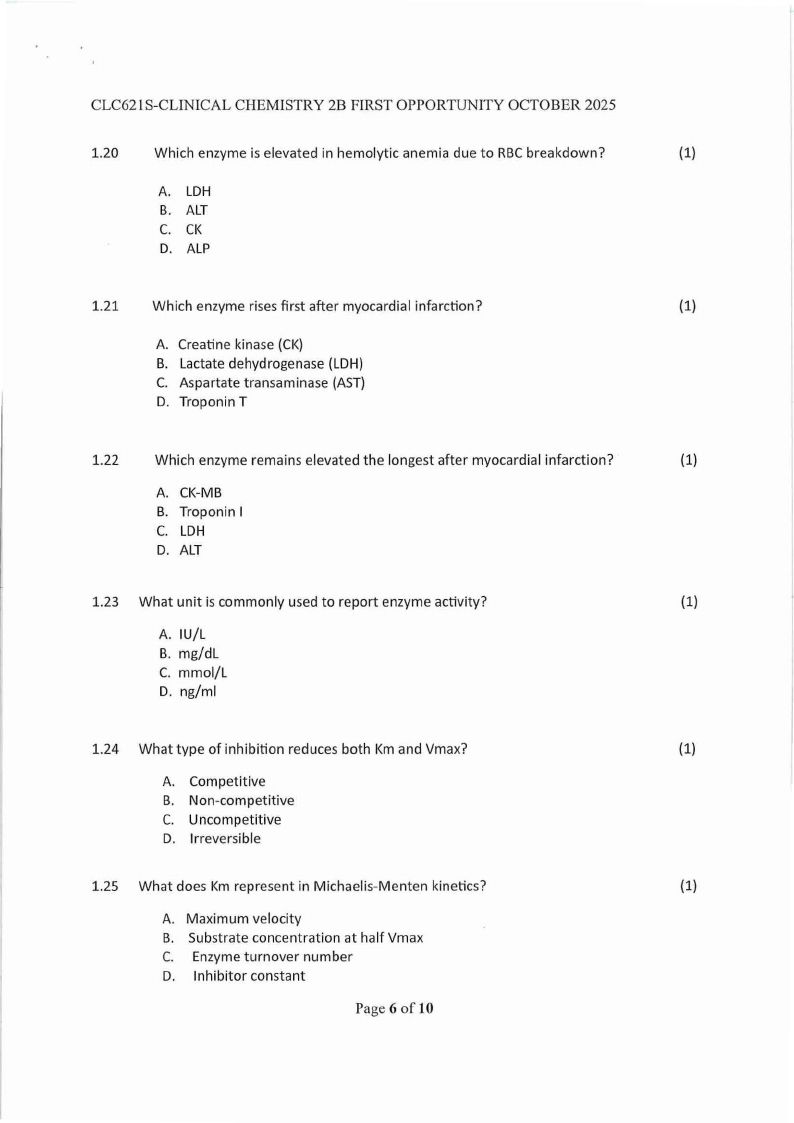
1.20
Which enzyme is elevat ed in hemolytic anemia due to RBC breakdown?
(1)
A. LOH
B. ALT
C. CK
0 . ALP
1.21 Which enzyme rises first after myocardial infarction?
(1)
A. Creatine kinase (CK)
B. Lactate dehydrogenase (LOH)
C. Aspartate transaminase (AST)
0. Troponin T
1.22
Which enzyme remains elevated the longest after myocardial infarction?
(1)
A. CK-MB
B. Troponin I
C. LOH
0 . ALT
1.23 What unit is commonly used to report enzyme activity?
(1)
A. IU/L
B. mg/dL
C. mmol/L
0. ng/ml
1.24 What type of inhibition reduces both Km and Vmax?
(1)
A. Competitive
B. Non-competitive
C. Uncompetitive
0 . Irreversible
1.25 What does Km represent in Michaelis-Menten kinetics?
(1)
A. Maximum velocity
B. Substrate concentration at half Vmax
C. Enzyme turnover number
0 . Inhibitor constant
Page 6 of 10

7 Page 7

▲back to top


CLC621S-CLINICAL CHEMISTRY 2B FIRST OPPORTUNITY OCTOBER 2025
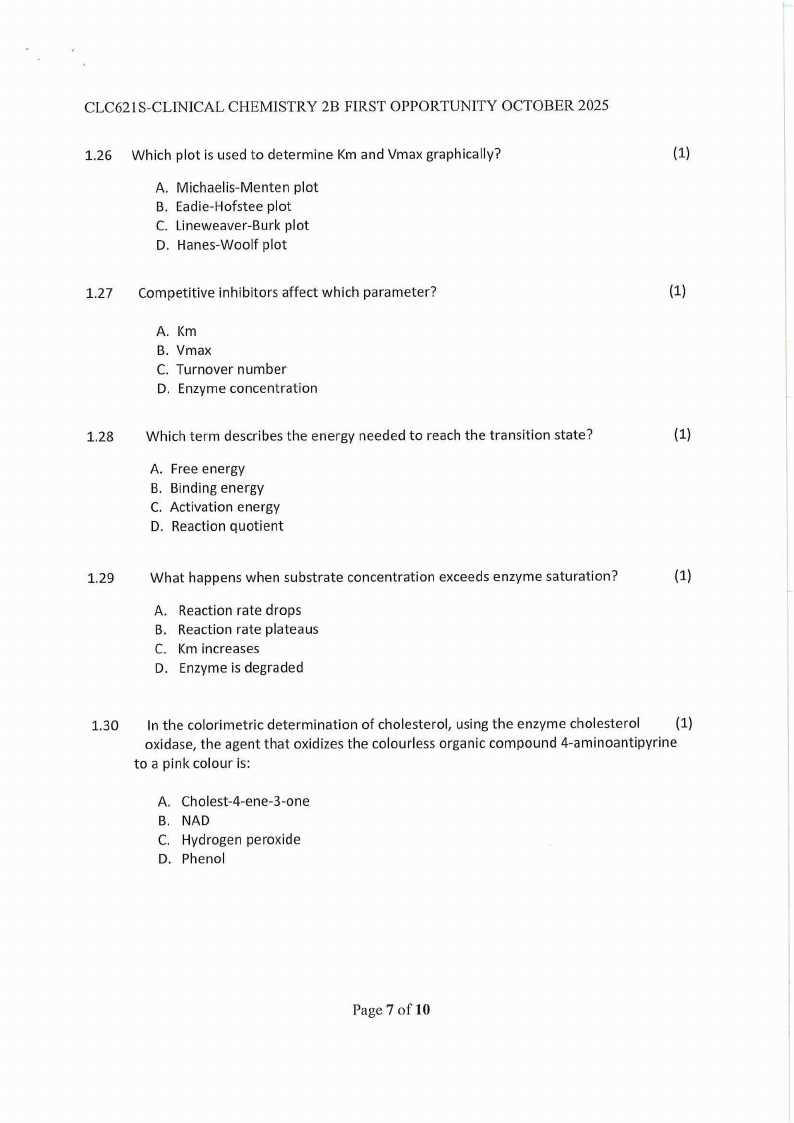
1.26 Which plot is used to determine Km and Vmax graphically?
(1)
A. Michaelis-Menten plot
B. Eadie-Hofstee plot
C. Lineweaver-Burk plot
D. Hanes-Woolf plot
1.27 Competitive inhibitors affect which parameter?
(1)
A. Km
B. Vmax
C. Turnover number
D. Enzyme concentration
1.28 Which term describes the energy needed to reach the transition state?
(1)
A. Free energy
B. Binding energy
C. Activation energy
D. Reaction quotient
1.29
What happens when substrate concentration exceeds enzyme saturation?
(1)
A. Reaction rate drops
B. Reaction rate plateaus
C. Km increases
D. Enzyme is degraded
1.30 In the colorimetric determination of cholesterol, using the enzyme cholesterol
(1)
oxidase, the agent that oxidizes the colourless organic compound 4-aminoantipyrine
to a pink colour is:
A. Cholest-4-ene-3-one
B. NAD
C. Hydrogen peroxide
D. Phenol
Page 7 of 10

8 Page 8

▲back to top


CLC621S-CLINICAL CHEMISTRY 2B FIRST OPPORTUNITY OCTOBER 2025
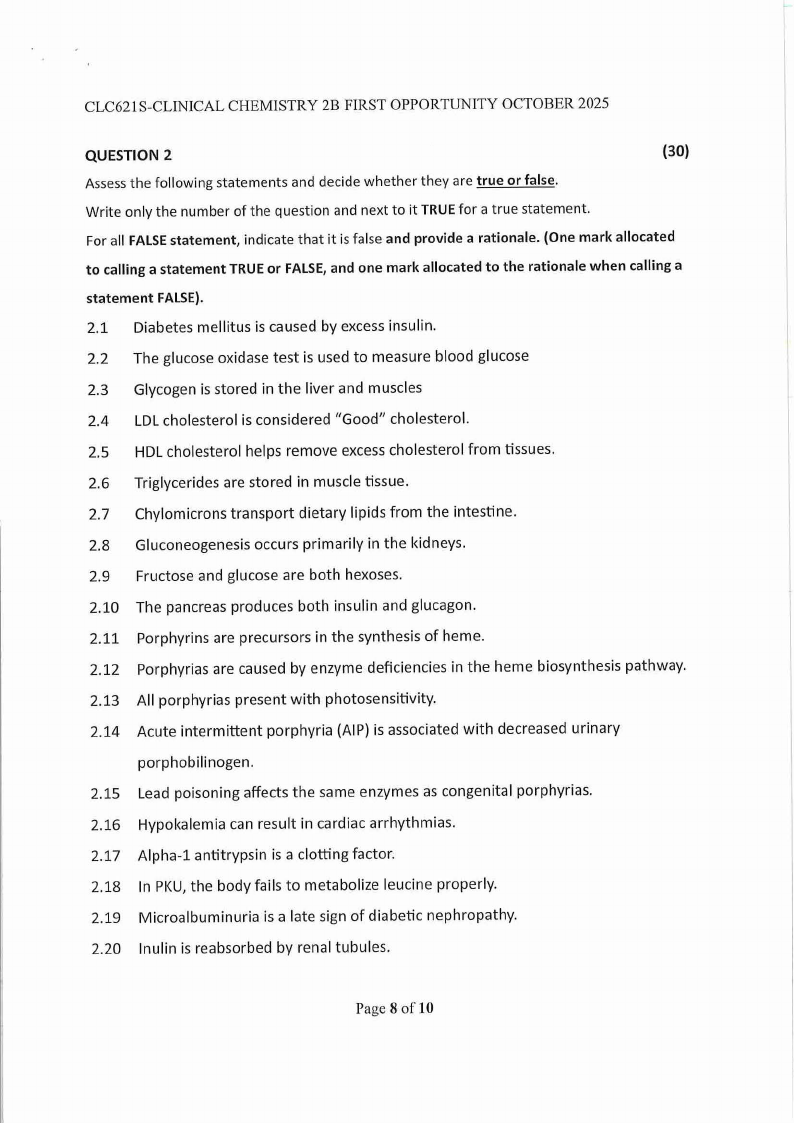
QUESTION 2
(30)
Assess the following statements and decide whether they are true or false.
Write only the number of the question and next to it TRUE for a true statement.
For all FALSE statement, indicate that it is false and provide a rationale. (One mark allocated
to calling a statement TRUE or FALSE, and one mark allocated to the rationale when calling a
statement FALSE).
2.1 Diabetes mellitus is caused by excess insulin.
2.2 The glucose oxidase test is used to measure blood glucose
2.3 Glycogen is stored in the liver and muscles
2.4 LDL cholesterol is considered "Good" cholesterol.
2.5 HDL cholesterol helps remove excess cholesterol from tissues.
2.6 Triglycerides are stored in muscle tissue.
2.7 Chylomicrons transport dietary lipids from the intestine.
2.8 Gluconeogenesis occurs primarily in the kidneys.
2.9 Fructose and glucose are both hexoses.
2.10 The pancreas produces both insulin and glucagon.
2.11 Porphyrins are precursors in the synthesis of heme.
2.12 Porphyrias are caused by enzyme deficiencies in the heme biosynthesis pathway.
2.13 All porphyrias present with photosensitivity.
2.14 Acute intermittent porphyria (AIP) is associated with decreased urinary
porphobilinogen.
2.15 Lead poisoning affects the same enzymes as congenital porphyrias.
2.16 Hypokalemia can result in cardiac arrhythmias.
2.17 Alpha-1 antitrypsin is a clotting factor.
2.18 In PKU, the body fails to metabolize leucine properly.
2.19 Microalbuminuria is a late sign of diabetic nephropathy.
2.20 lnulin is reabsorbed by renal tubules.
Page 8 of 10

9 Page 9

▲back to top


CLC621 S-CLINICAL CHEMISTRY 2B FIRST OPPORTUNITY OCTOBER 2025
SECTION B
(20 MARKS]
QUESTION 3
{20)
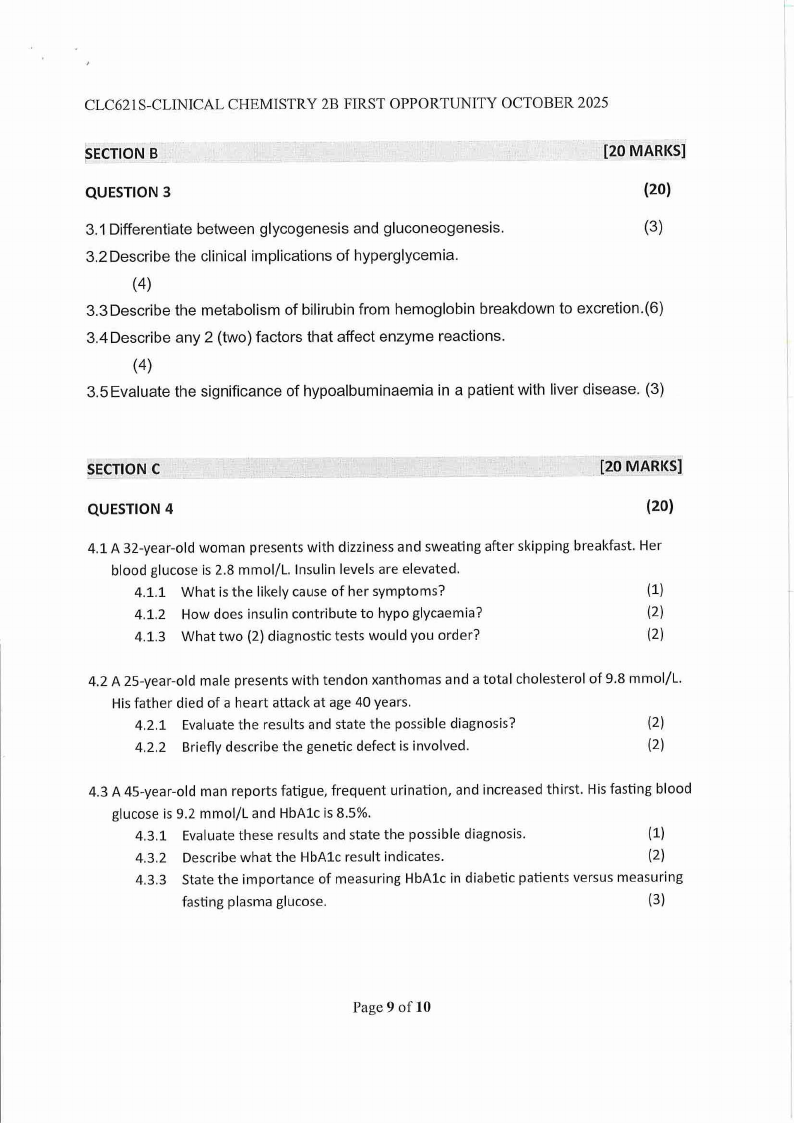
3.1 Differentiate between glycogenesis and gluconeogenesis.
(3)
3.2 Describe the clinical implications of hyperglycemia.
(4)
3.3Describe the metabolism of bilirubin from hemoglobin breakdown to excretion.(6)
3.4 Describe any 2 (two) factors that affect enzyme reactions.
(4)
3.5 Evaluate the significance of hypoalbuminaemia in a patient with liver disease. (3)
SECTION C
(20 MARKS]
QUESTION 4
(20)
4.1 A 32-year-old woman presents with dizziness and sweating after skipping breakfast. Her
blood glucose is 2.8 mmol/L. Insulin levels are elevated.
4.1.1 What is the likely cause of her symptoms?
(1)
4.1.2 How does insulin contribute to hypoglycaemia?
(2)
4.1.3 What two (2) diagnostic tests would you order?
(2)
4.2 A 25-year-old male presents with tendon xanthomas and a total cholesterol of 9.8 mmol/L.
His father died of a heart attack at age 40 years.
4.2.1 Evaluate the results and state the possible diagnosis?
(2)
4.2.2 Briefly describe the genetic defect is involved.
(2)
4.3 A 45-year-old man reports fatigue, frequent urination, and increased thirst. His fasting blood
glucose is 9.2 mmol/L and HbAlc is 8.5%.
4.3.1 Evaluate these results and state the possible diagnosis.
(1)
4.3.2 Describe what the HbAlc result indicates.
(2)
4.3.3 State the importance of measuring HbAlc in diabetic patients versus measuring
fasting plasma glucose.
(3)
Page 9 of 10

10 Page 10

▲back to top


CLC62 IS-CLINICAL CHEMISTRY 2B FIRST OPPORTUNITY OCTOBER 2025
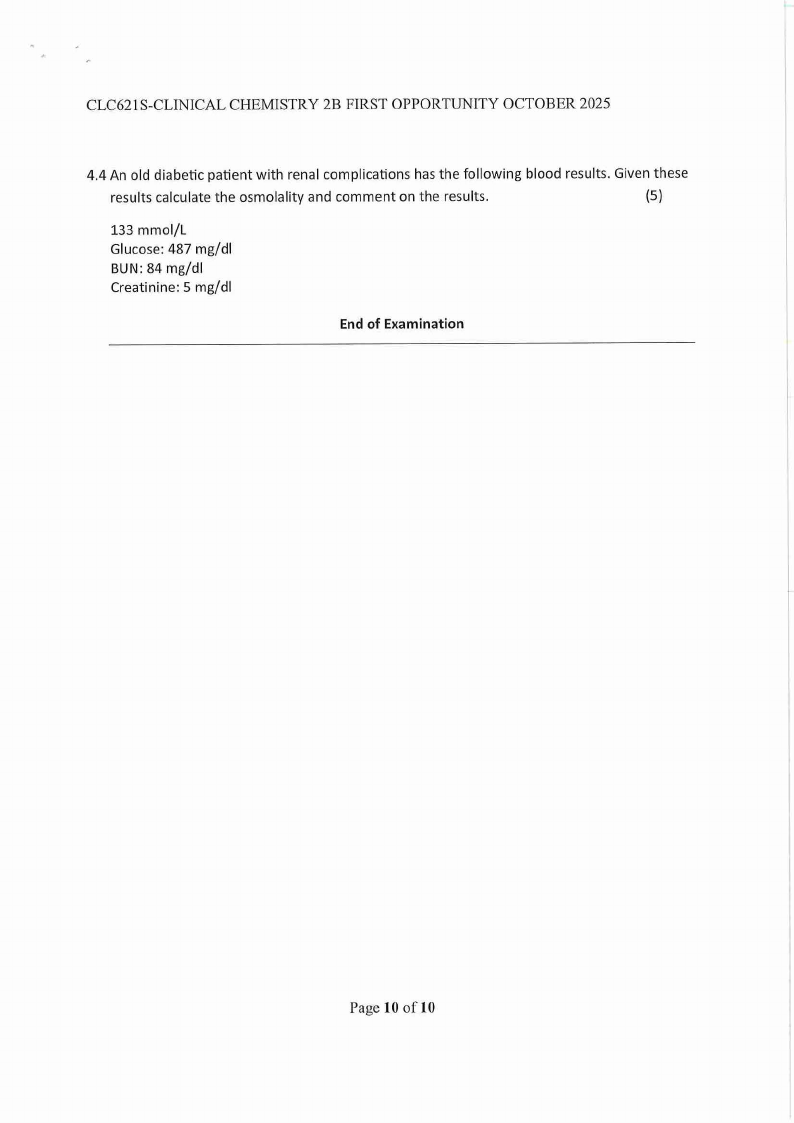
4.4 An old diabetic patient with renal complications has the following blood results. Given these
results calculate the osmolality and comment on the results.
(5)
133 mmol/L
Glucose: 487 mg/di
BUN: 84 mg/di
Creatinine: 5 mg/di
End of Examination
Page 10 of 10