106
Act :s;o. 28, 200~
CJlwernrnent Gaiett~ 30 o~ccmhcr ~uo➔
COMPAi\\(ES ACT. 200~
i'\\o.336~
(6) lf. alh:r a copy of a requisition requiring no1ici.: of a rc~olu~ion lms ~ccn
lod~ed at the regi stered office of the company. an annual general meetmg 1s called l11r_a
date 30 days or less after the copy ha~ been lodged, the copy. though not lodged w1th111
the time required by this subsection, is deemed to have been properly lodged.
(7) The Court may absolve any company from the obligation to circulate ony
resolution or swtement in tenns ofthis section it: on the application either of the company
or of any other interested person. the Court is satisfied that 1hc righ1s thereby confcned
nre being abused to secure needless publicity for defamatory maucr.
(8) An order under subsection (7 l mny include an order for the payment by the
rcquisitionists of the costs or any ponion of the costs incurred in connection with the
relevant application. whether or not they are part ks to the :ipplicntion.
(9) Notwithstnndinganythingcontnined in the m1ides nfn company. the business
which may be dealt with at an annual general meeting. must include any resolution of
which notice has been given in accordance with this section. and. for the purpose of this
subsection, notice is deemed to have been so given notwi1hstr111d ing the accidental
omlssion to give that notice to one or more members.
( I0) If there is a failure to comply with subsection I I l. every director or officer
of the company who authorises or knowingly pennits or is pnny to the failure. commits
an offence and is liable to a fine which docs not exceed NS-I 000.
Notice of meetings and resolutions
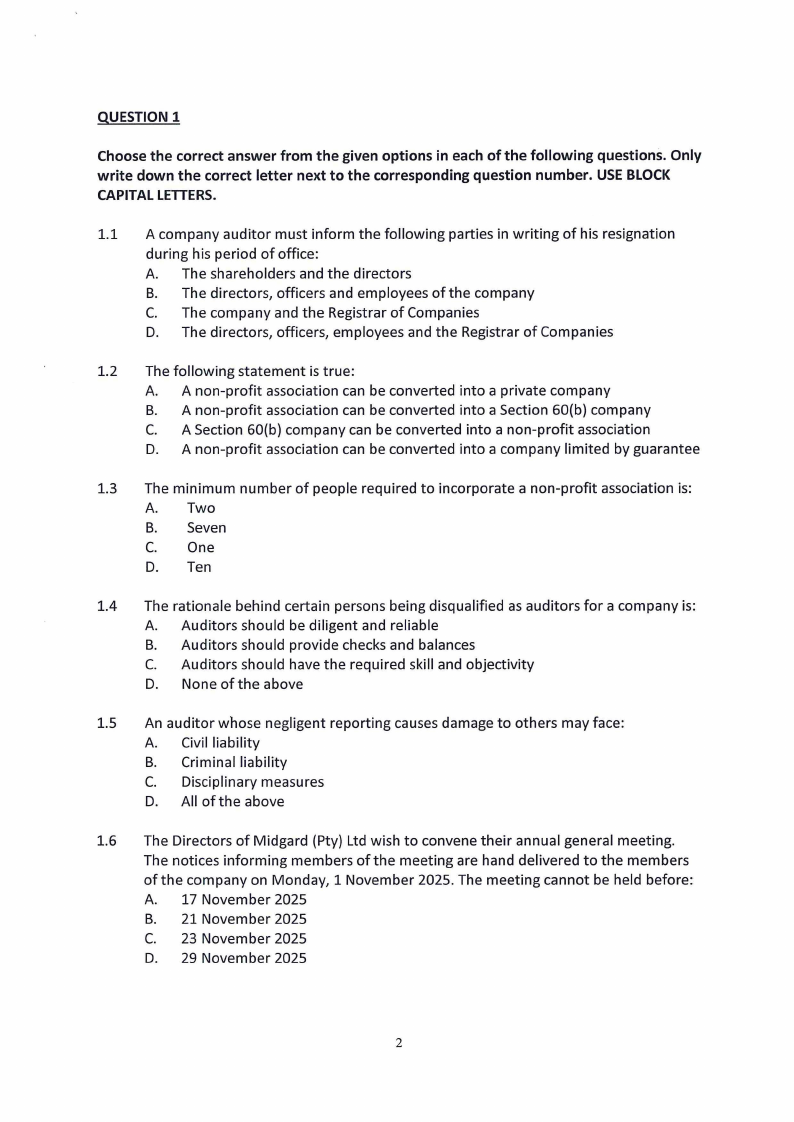
194. ( IJ Unless the anicles of a company provide for a longer period ofnotice,
the annual general meeting or a genernl meeting called for the purpose of passing a
special resolution may be called by nor less than 11 days· notice in writing and any other
general meeting may be called by 1101 less than 14 days' notice in writing.
. (2) Any provision in the nnicles ofa company prO\\·iding fora shoner period of
notice~not being of an adjourned meeting. is void.
(3) Notwithstanding subsection (I), a meeting ofa company is deemed to have
been duly called -
(a) in the case ofa meeting which is called on a shnrter period of notice than is
specified in that subsection or provided for in the company·s anicles. if it is
so a,grccd, _before or at the meeting. by a majority in number of the members
luwmg a nght to attend and vote at the meeting who hold not less than 95
percent of the total voting rights of all the members of the company; or
(b) in lhe case of a meeting in ~cspe~t _o~ which notice ns contemplutetl in
subsect1~n (I) has not been given, tf 111s so agreed in writing. before or at
the mceung, by all the members of the company.
(4) No rcsoluti?110fwhich special notice isrequired 1obe given in tenns ufthis
tct has erect unless notice ofthe mtcntion to move it has been given to the company not
ess than -8 d_ays before the me~tmg at which it is moved, untl the company must give its
me?1bers nouce o_f that resoluuon at the snmc time. and in the same manner as it ives
not,_ce ofthe mce11~1g, or: tfthat is not prncticable, either by ad,·ertisement in a news gn er
~~;ng an approp~ut_c circulat1on or m any other manner allowed by the articles ~f ihe
call~~y, n~t les~;~an 21 days before the meeting, but. if ,1 111ecting of the company is
~e•e::~an(' bee •or •
sub~le~:7:,~
~~a~
-
ays or less aner notice of the intention Ill move that rnsolution ha~
~•\\n~ncc, though !lot given within the time required by this
'
o ,a,c ecn properly given for the purposes of the meeting.
No.3362
li,wcrnmcnt Gnzene >0 Dccemh~r 201J~
107
:\\ct ~ o. 28, 200-l
CO~IPA,'.IES ACT, 200~
:·e,~t~~iJ' (Sl Any company which fail~ to give noiicc to i!s mc1:1bers '15
subsection (4) commits un offc.ncc and " habk tu a fine wluch do.snot cxcee - •
Manner of gh'ing notice
l9S. Unless the urticles of a company otherwise provide, notice ofa meetil~g.~f
a company must be served on every member of 1he ~ompany 111 the manner_"'. "h•~!l.
notices are required to be sen ·ed in terms oflablc Aor fable B of Schedule I. "l11che,c1
is applicable 10 the company.
Representation of com pony or other body corporate at certain meetings
196. ( Jl A company or other body corporntc may, by resolution of its direc1urs
or other goveming body. authmise any person to act as it_s represe111a11ve at any me~u ng
of any company of which it is a member mat any meetmg of any class ofmcmbeis of
that company.
(2) Subsection ( I l does. with the necessary changes. apply with reference to
meetings of debenture holders and creditors of a company.
(3) A person authorised under subsec1ion ( I) is entitled to exercise 011 behalf nf
the company or other body corporntc which he or she represents. ~h~ ~a_me powl!rs as that
company or body coq1orme could have exercised if it were an md1v1dual shareholder.
debenture holder or creditor of the company in relation 10 which that person has been
authorised to act.
Representation of members ol mcctin;a:s by proxies
197. (I) Any member ofa company entitled to attend and vote at a meeting of
the company, or where the articles of a company limited by guarantee so pro\\'ide, any
member of that company. is entitled to appoint another person, whether a member or not .
as proxy to auend. speak. and vote in that member's stead at any meeting ofthe company.
but, unless the anicles othenvise provide, a proxy is not entitled to ,·ate except on a poll
and a member of a privute company is not entitled to appoint more than one proxy.
(2) In every notice calling a meeting of a company having a share capital and
on the face of every proxy form issued at the company"s expense there must appear with
reasonable prominence a sta1eme111 that a member entitled to anend nnd vote nt the meeting
is entitled to appoint a proxy or, where ii is allowed, one or more proxies. to aucnd and
speak and vote in that member·s stead. and that a proxy need not also be a memberofthe
company.
(3) If there is u failure to comply with the requirements of subsection (2J in
respect ofany meeting. every director and every officer of !he company who umhorises.
knowingly pennits or is party lo the failure. commits an offence and is liable to a line
which does not exceed NS400.
(4) Any provision contain~d in a company·s articles is void in so for as it wuuld
have the effect of requiring the inslrument appointing a proxy. or any other document
necess~ to show the validity ~for otherwise reluting to the appointment of a proxy, tl,
be received by the c~mpany nt ,ts registered office or by any other person more titan 48
hours before a meeting 111 order that the appointmem may be effective.
(5) If, for the '"!'Poses of any meeting of a company, invitations 10 appoint as
proxy a pers~n. or one ot a number of persons, specified in the invitations are
the company s expense tu some only o_r the members en1i1led 10 notice of the
imsseueetdin8g1
and_ to be rcpresent7d by proxy, every director or officer of the company who authorises
or knowmgly pennns or 1s " party to 1h01 issue. commits an offence and is liuble 10 a fine
which does not exceed l\\S400.