


 |
DFM811S - DIGITAL FORENSICS MANAGEMENT - 2ND OPP - JULY 2025 |
|
|
1 Page 1 |
▲back to top |
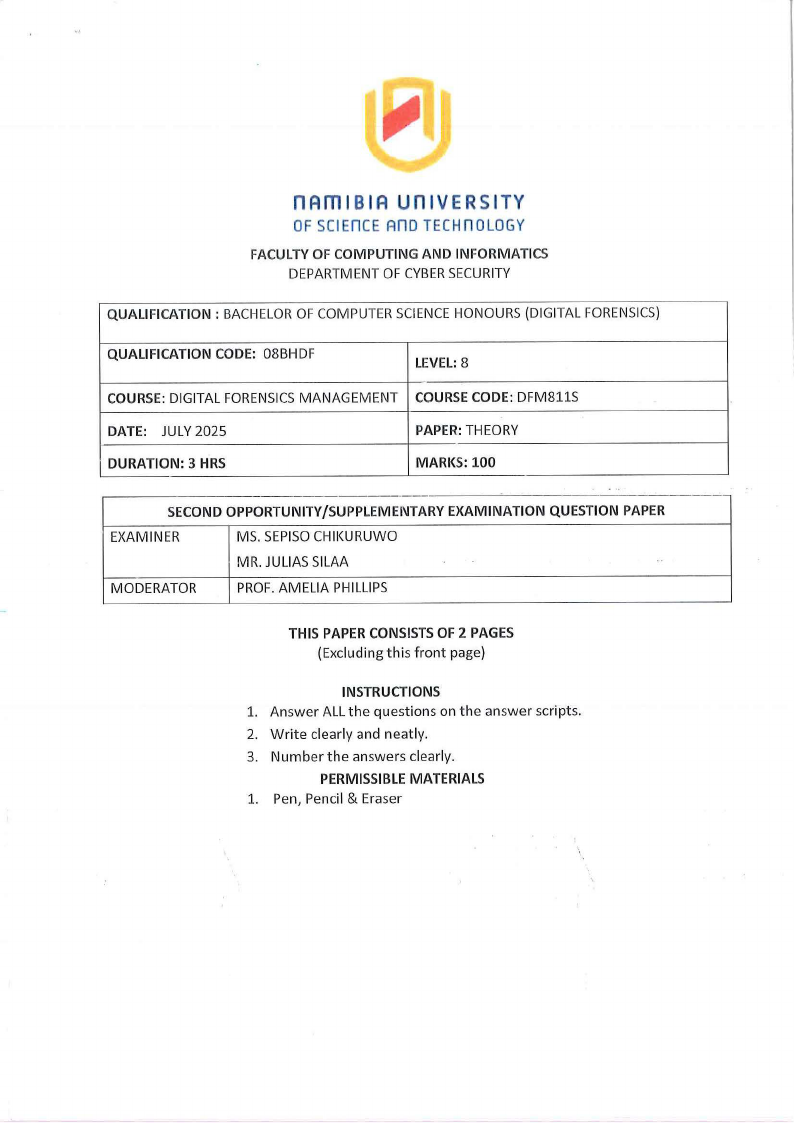
nAmtBIA unlVERSITY
OFSCIEnCEAno TECHnOLOGY
FACULTY OF COMPUTING AND INFORMATICS
DEPARTMENTOF CYBERSECURITY
QUALIFICATION: BACHELOROF COMPUTERSCIENCEHONOURS(DIGITALFORENSICS)
QUALIFICATION CODE: 08BHDF
LEVEL: 8
COURSE: DIGITALFORENSICSMANAGEMENT COURSE CODE: DFM811S
DATE: JULY2025
PAPER: THEORY
DURATION: 3 HRS
MARKS: 100
--
SECOND OPPORTUNITY/SUPPLEMENTARY EXAMINATION QUESTION PAPER
EXAMINER
MS. SEPISOCHll<URUWO
MR. JULIASSILAA
..
MODERATOR
PROF.AMELIA PHILLIPS
THIS PAPER CONSISTS OF 2 PAGES
(Excluding this front page)
INSTRUCTIONS
1. Answer ALL the questions on the answer scripts.
2. Write clearly and neatly.
3. Number the answers clearly.
PERMISSIBLE MATERIALS
1. Pen, Pencil & Eraser
\\
\\
|
|
2 Page 2 |
▲back to top |
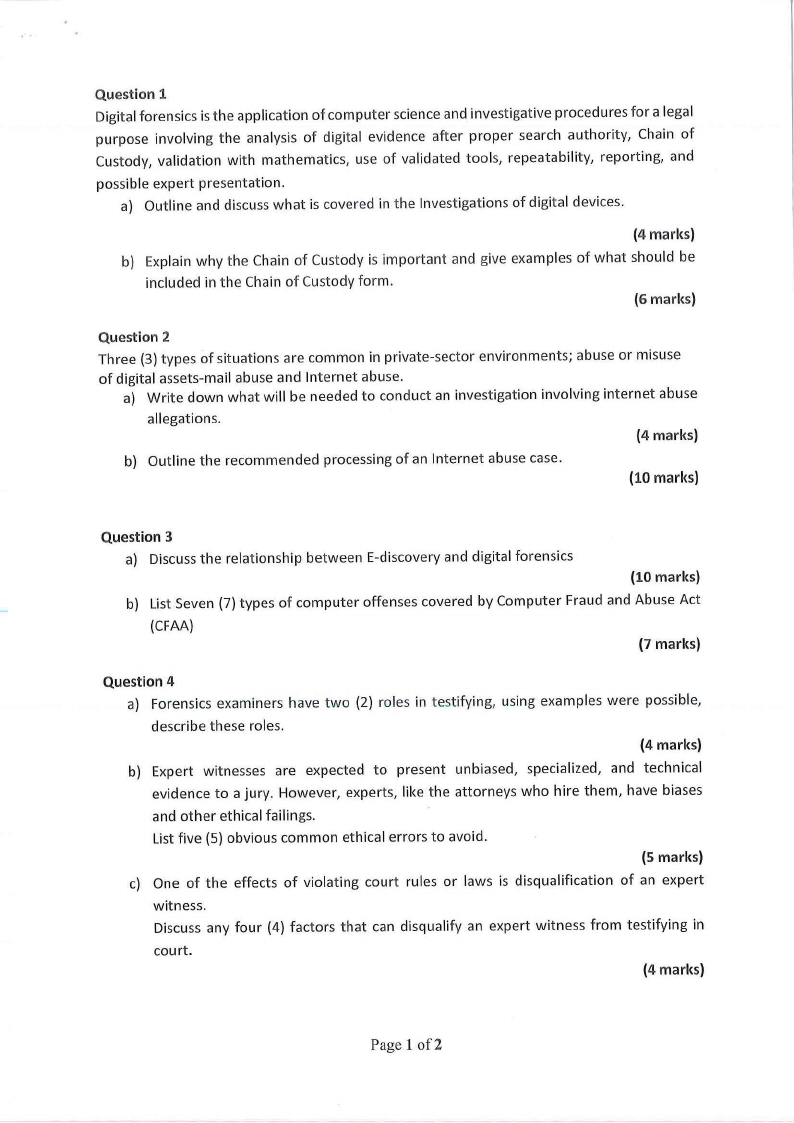
Question 1
Digital forensics is the application of computer science and investigative procedures for a legal
purpose involving the analysis of digital evidence after proper search authority, Chain of
Custody, validation with mathematics, use of validated tools, repeatability, reporting, and
possible expert presentation.
a) Outline and discuss what is covered in the Investigations of digital devices.
(4 marks)
b) Explain why the Chain of Custody is important and give examples of what should be
included in the Chain of Custody form.
(6 marks)
Question 2
Three (3) types of situations are common in private-sector environments; abuse or misuse
of digital assets-mail abuse and Internet abuse.
a) Write down what will be needed to conduct an investigation involving internet abuse
allegations.
(4 marks)
b) Outline the recommended processing of an Internet abuse case.
(10 marks)
Question 3
a) Discuss the relationship between E-discovery and digital forensics
(10 marks)
b) List Seven (7) types of computer offenses covered by Computer Fraud and Abuse Act
(CFAA)
(7 marks)
Question 4
a) Forensics examiners have two (2) roles in testifying, using examples were possible,
describe these roles.
(4 marks)
b) Expert witnesses are expected to present unbiased, specialized, and technical
evidence to a jury. However, experts, like the attorneys who hire them, have biases
and other ethical failings.
List five (5) obvious common ethical errors to avoid.
(5 marks)
c) One of the effects of violating court rules or laws is disqualification of an expert
witness.
Discuss any four (4) factors that can disqualify an expert witness from testifying in
court.
(4 marks)
Page 1 of 2
|
|
3 Page 3 |
▲back to top |
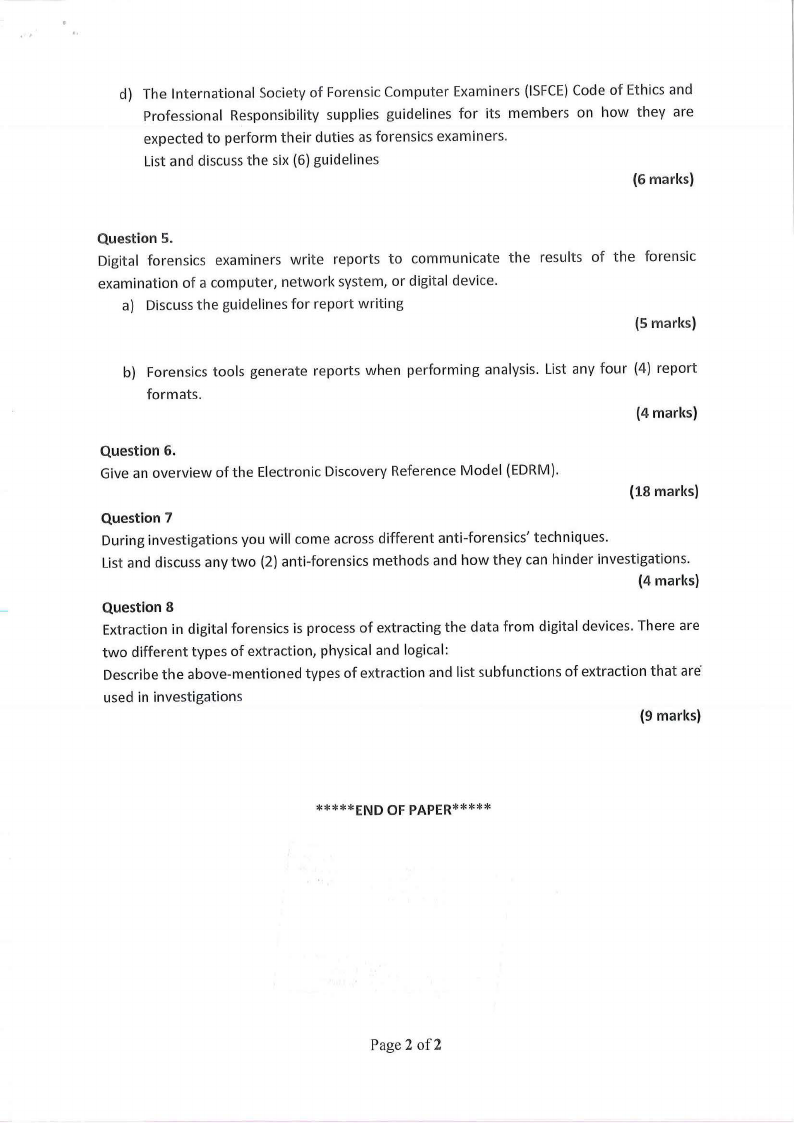
d) The International Society of Forensic Computer Examiners (ISFCE)Code of Ethics and
Professional Responsibility supplies guidelines for its members on how they are
expected to perform their duties as forensics examiners.
List and discuss the six (6) guidelines
(6 marks)
Question 5.
Digital forensics examiners write reports to communicate the results of the forensic
examination of a computer, network system, or digital device.
a) Discuss the guidelines for report writing
(5 marks)
b) Forensics tools generate reports when performing analysis. List any four (4) report
formats.
(4 marks)
Question 6.
Give an overview of the Electronic Discovery Reference Model (EDRM).
(18 marks)
Question 7
During investigations you will come across different anti-forensics' techniques.
List and discuss any two (2) anti-forensics methods and how they can hinder investigations.
(4 marks)
Question 8
Extraction in digital forensics is process of extracting the data from digital devices. There are
two different types of extraction, physical and logical:
Describe the above-mentioned types of extraction and list subfunctions of extraction that are
used in investigations
(9 marks)
*****END OF PAPER*****
Page 2 of2