


 |
CBS711S - CONSUMER BEHAVIOUR IN SPORTS - 1ST OPP - JUNE 2025 |
|
|
1 Page 1 |
▲back to top |
n Am I BI A u n IVER s I TY
OF SCIEnCE
Ano TECHnDLOGY
FACULTY OF COMMERCE, HUMAN SCIENCESAND EDUCATION
DEPARTMENT OF MARKETING, LOGISTICS AND SPORT MANAGEMENT
QUALIFICATION: BACHELOROF SPORTMANAGEMENT
QUALIFICATION CODE: 07BSMN
LEVEL: 7
COURSE CODE: CBS711S
COURSE NAME: CONSUMER BEHAVIOR IN SPORT
SESSION:
JUNE 2025
PAPER:
THEORY
DURATION:
3 HOURS
MARKS:
100
EXAMINER(S)
FIRST OPPORTUNITY EXAMINATION PAPER
MR. PETERHAUFIKU (FT/ PT/ DI)
MODERATOR: Mrs. T'Neil Young
INSTRUCTIONS
1. This paper comprises FIVE (5) questions
2. Answer All FOUR (5) questions.
3. Read all the questions carefully before answering.
4. Marks for each question are indicated at the end of each question
5. Write clearly and neatly.
6. Number the answers clearly.
THIS EXAMINATION PAPER CONSISTS OF 3 PAGES (Including this front page)
|
|
2 Page 2 |
▲back to top |
QUESTION 1
1.1 Define the concept of consumer behaviour in sport and briefly discuss its relevance for
sport marketers and team managers.
(S marks)
1.2 Describe the stages in the consumer decision-making process in sport, using a local sports
event example:
A. Problem awareness
B. Internal and external information sources
C. Consideration of alternatives
D. Purchase behaviour
E. Experience and satisfaction
(2 marks)
(3 marks)
(3 marks)
(3 marks)
(4 marks)
QUESTION 2
Social and psychological influences affect how fans and participants engage in sport.
Discussthe role of the following in shaping sport consumption behaviour, using sport-specific
examples:
• Peer and family influence
• Role of opinion leaders (e.g., celebrities, influencers, coaches)
• Socioeconomic status and its impact on sport preferences
• Cultural identity and traditional sporting values
(6 marks)
(6 marks)
(6 marks)
(7 marks)
QUESTION3
Sports brands invest heavily in fan retention and loyalty.
Analyse the effectiveness of the following match-day and non-match-day engagement
strategies, supporting your answer with real-life casesfrom any sport code:
• Exclusive member experiences
• Stadium technology and innovation
• Community-based sport events
• Behind-the-scenes digital content
• Fan contests and gamification
(5 marks)
(5 marks)
(5 marks)
(5 marks)
(5 marks)
2
|
|
3 Page 3 |
▲back to top |
QUESTION 4
Digital platforms have transformed the relationship between fans and sport entities.
Critically assessthe strategic use of digital media in building and managing fan relationships in
sport. Your answer should address:
• Fan personalization
• Two-way communication and interactivity
• Building brand communities
• Influencer marketing in sport
• Measuring digital engagement
(15 marks)
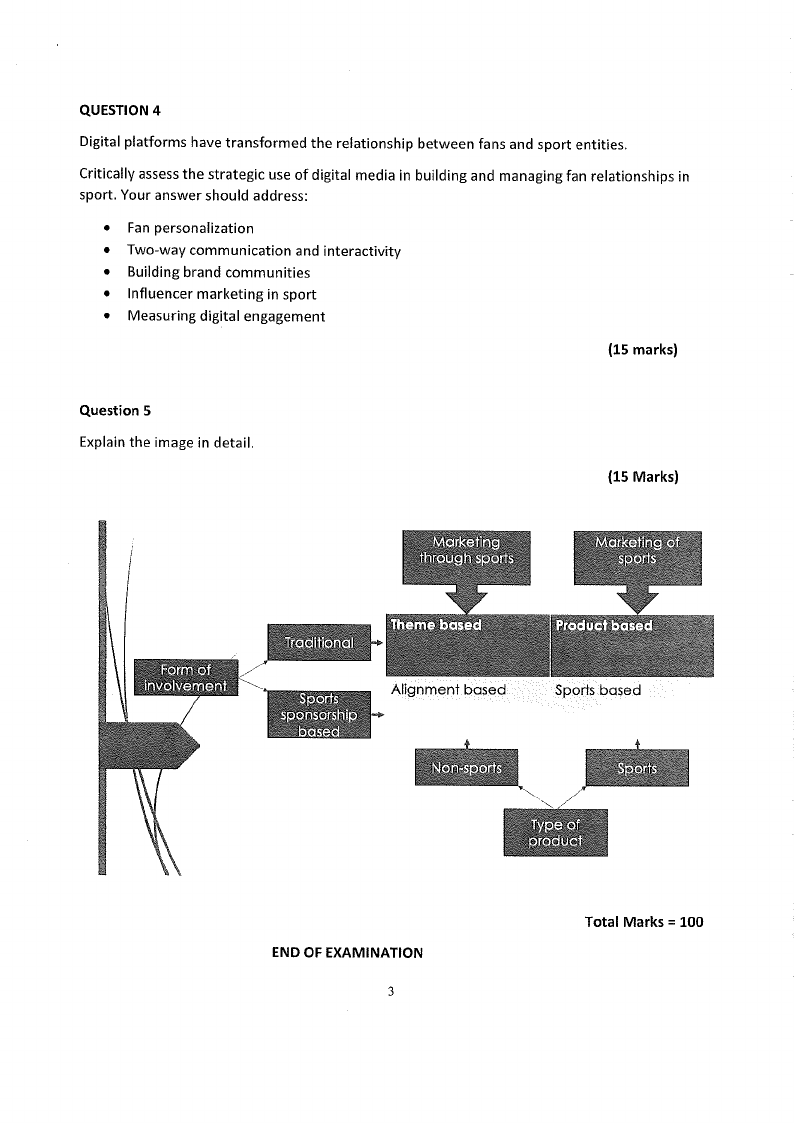
Question 5
Explain the image in detail.
(15 Marks)
Alignment based
Sports based
END OF EXAMINATION
3
Total Marks = 100