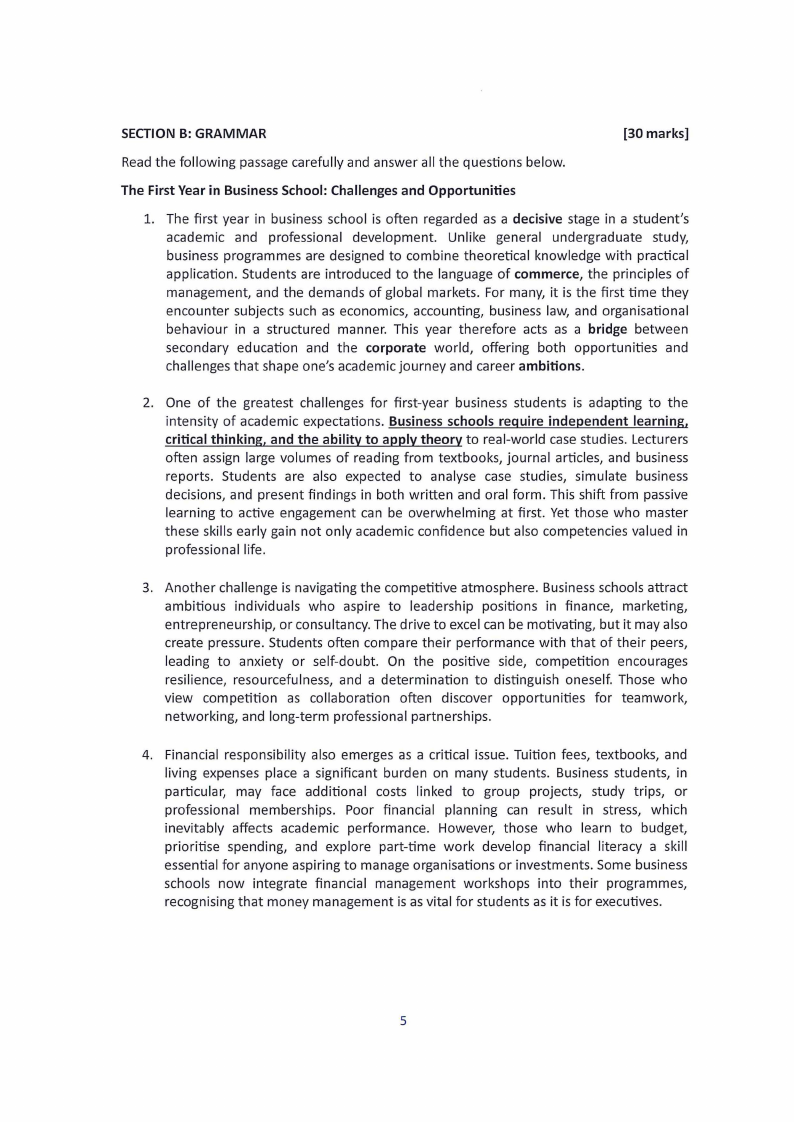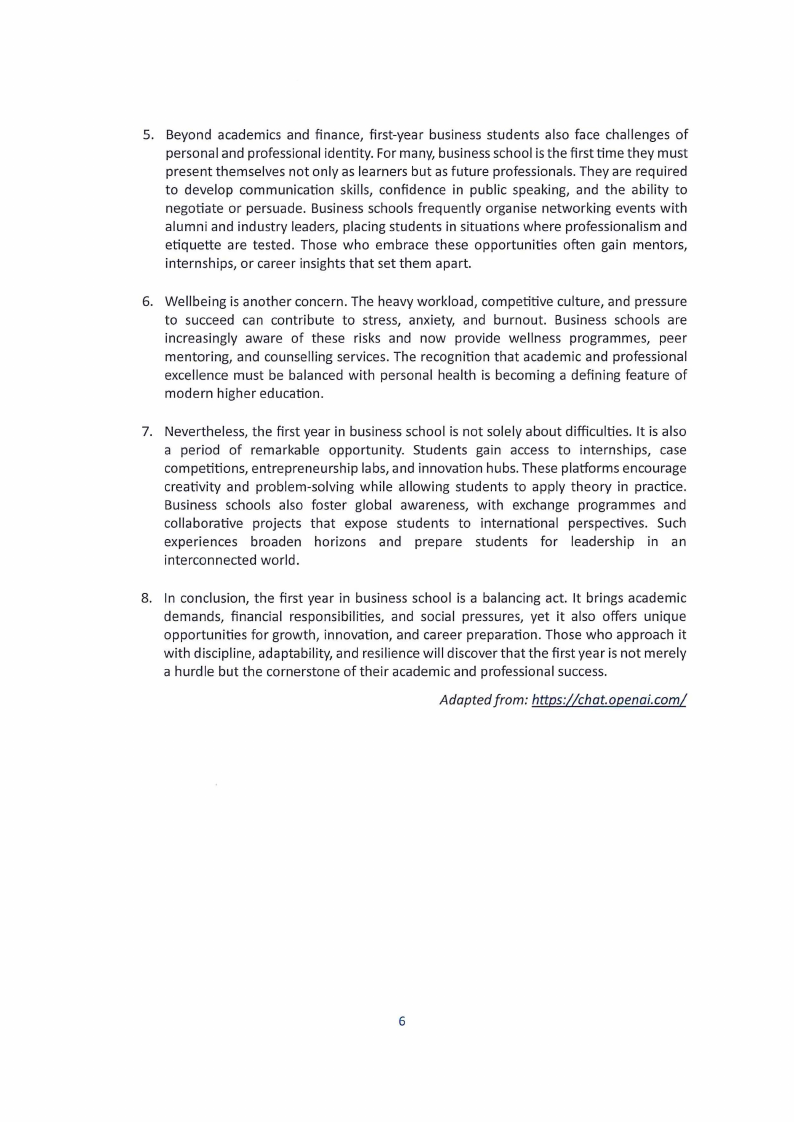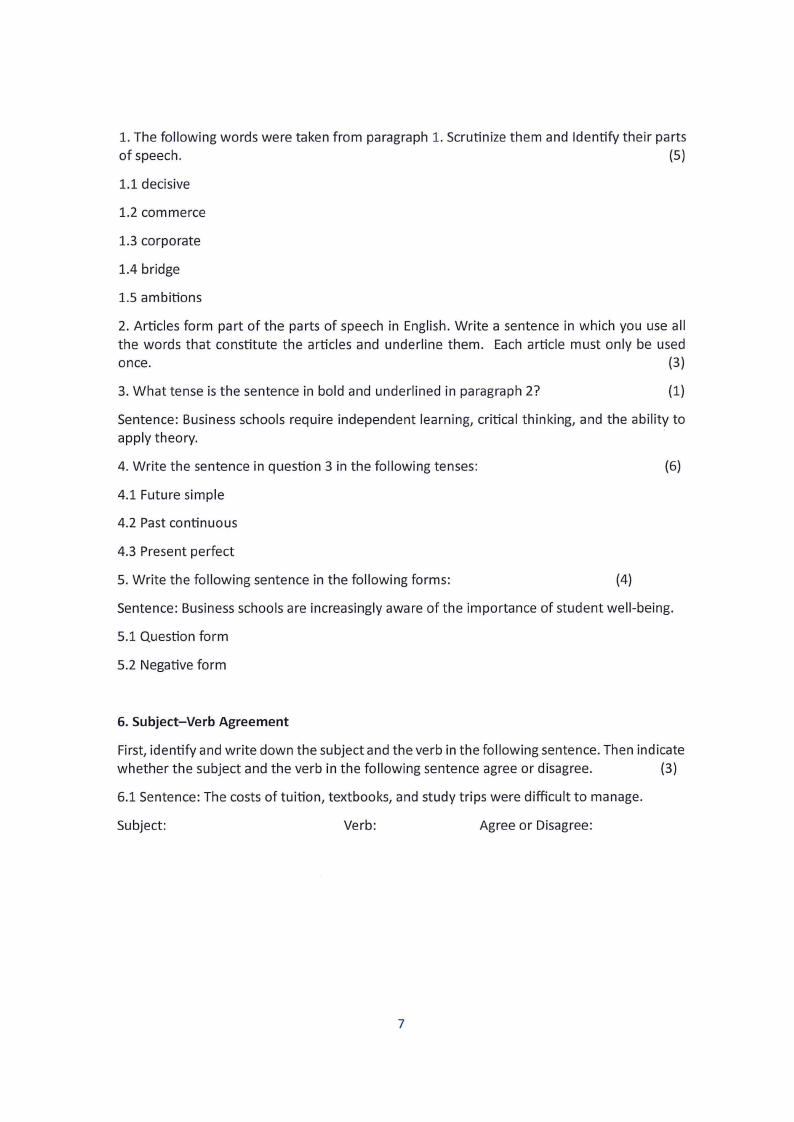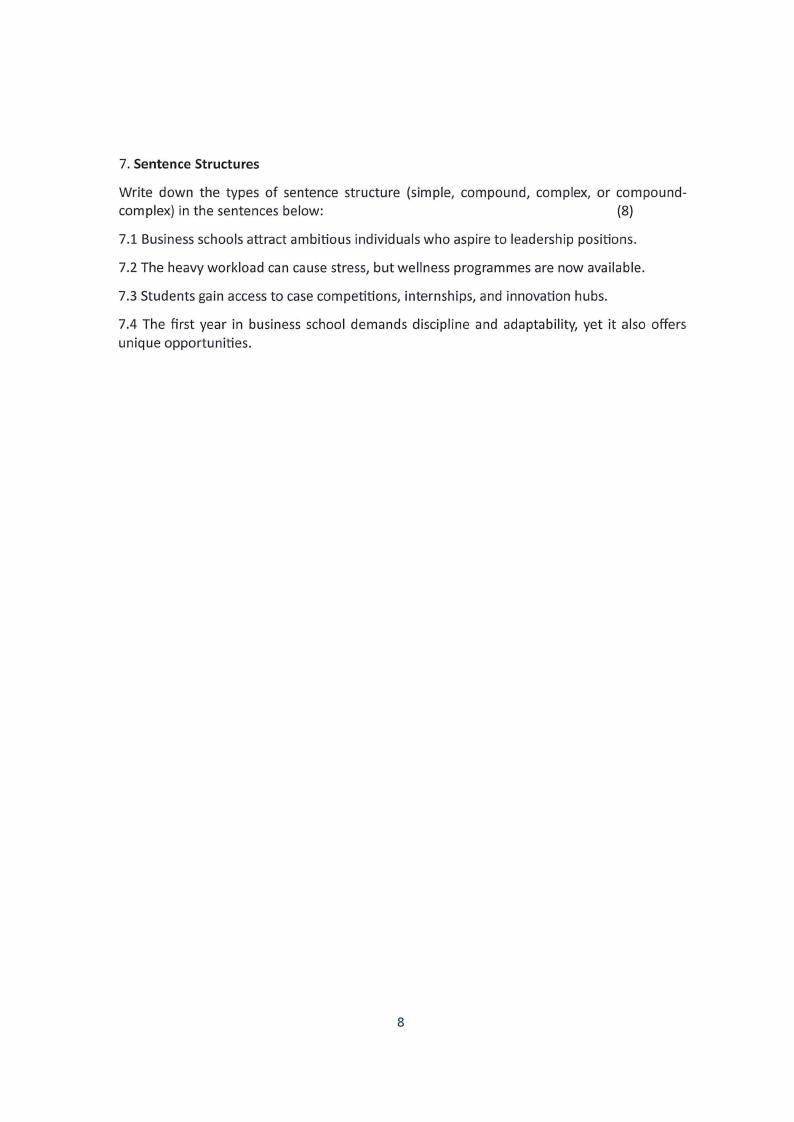
SECTION C: PARAGRAPH AND ESSAY ANALYSIS
[30 marks]
Read the following essay carefully and then answer the questions that follow.
Setting Yourself Apart Academically
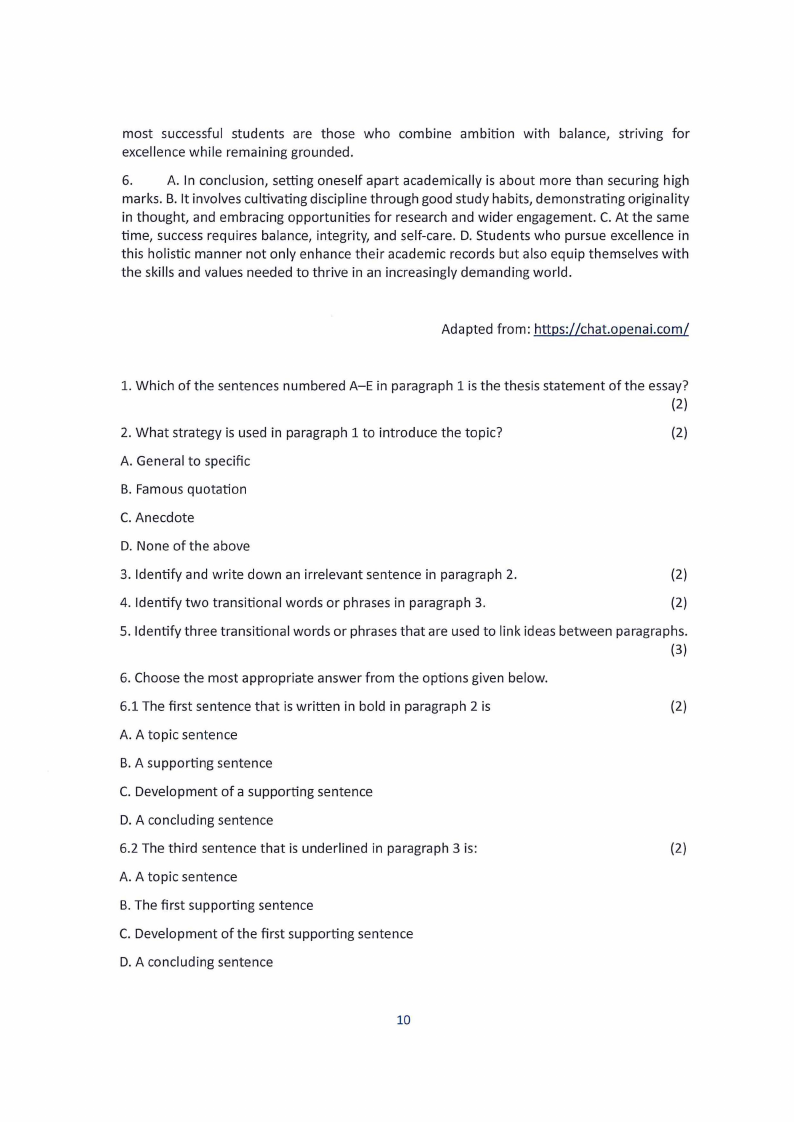
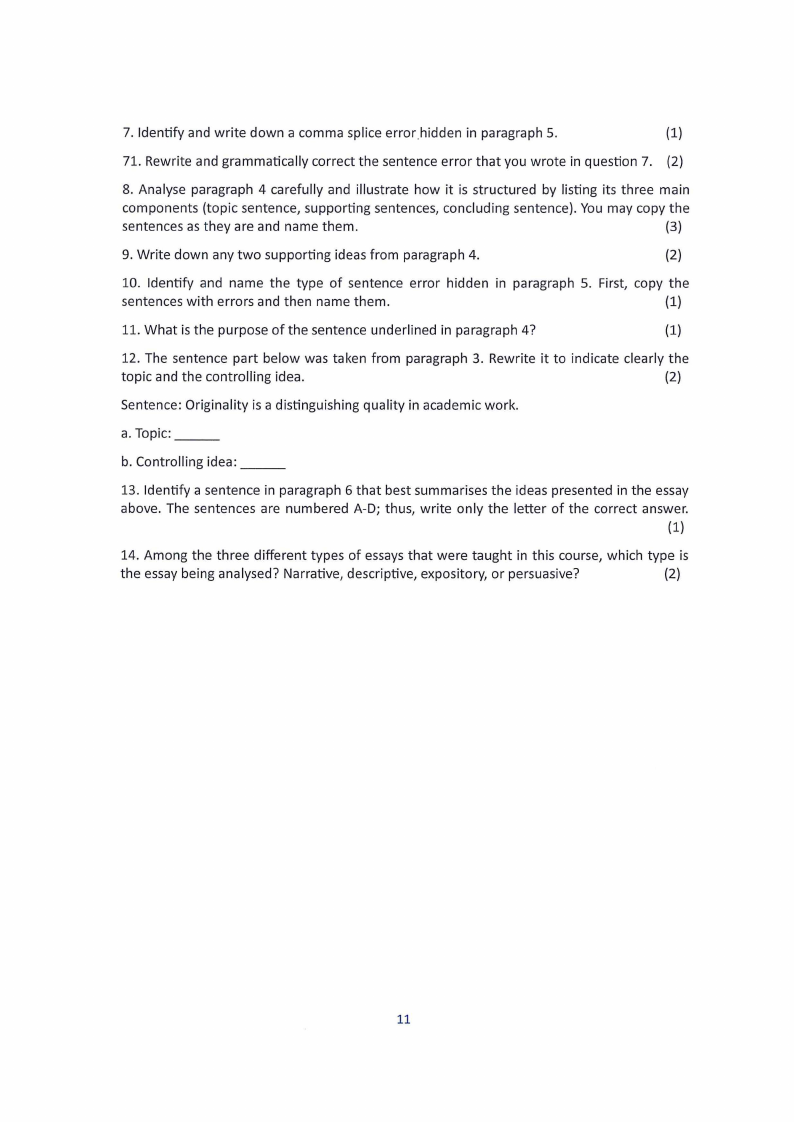
1. A. In today's competitive world, students cannot rely solely on passing grades if they
wish to stand out. B. Academic distinction requires deliberate effort, clear strategies, and a
willingness to go beyond the minimum. C. Whether at university or in professional training
institutions, the ability to set oneself apart academically is vital, not only for career
advancement but also for personal growth. D. Students who achieve this are those who
combine discipline, creativity, and resilience. E. This essay will examine three key ways in
which students can distinguish themselves: by developing strong study habits, by cultivating
originality, and by engaging actively in research and wider learning opportunities.
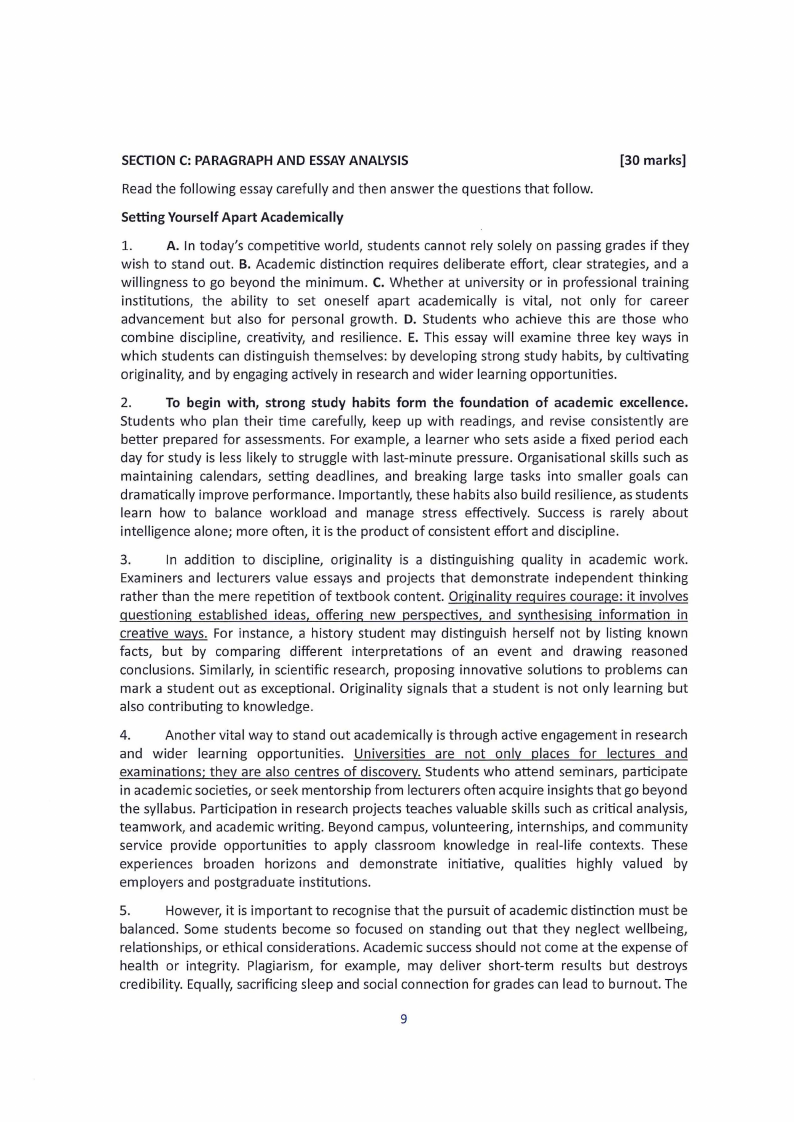
2.
To begin with, strong study habits form the foundation of academic excellence.
Students who plan their time carefully, keep up with readings, and revise consistently are
better prepared for assessments . For example, a learner who sets aside a fixed period each
day for study is less likely to struggle with last-minute pressure. Organisational skills such as
maintaining calendars, setting deadlines, and breaking large tasks into smaller goals can
dramatically improve performance. Importantly, these habits also build resilience, as students
learn how to balance workload and manage stress effectively. Success is rarely about
intelligence alone; more often, it is the product of consistent effort and discipline.
3.
In addition to discipline, originality is a distinguishing quality in academic work.
Examiners and lecturers value essays and projects that demonstrate independent thinking
rather than the mere repetition of textbook content. Originality requires courage : it involves
questioning established ideas, offering new perspectives, and synthesising information in
creative ways. For instance, a history student may distinguish herself not by listing known
facts, but by comparing different interpretations of an event and drawing reasoned
conclusions. Similarly, in scientific research, proposing innovative solutions to problems can
mark a student out as exceptional. Originality signals that a student is not only learning but
also contributing to knowledge .
4.
Another vital way to stand out academically is through active engagement in research
and wider learning opportunities. Universities are not only places for lectures and
examinations; they are also centres of discovery. Students who attend seminars, participate
in academic societies, or seek mentorship from lecturers often acquire insights that go beyond
the syllabus. Participation in research projects teaches valuable skills such as critical analysis,
teamwork, and academic writing. Beyond campus, volunteering, internships, and community
service provide opportunities to app ly classroom knowledge in real-life contexts. These
experiences broaden horizons and demonstrate initiative, qualities highly valued by
employers and postgraduate institutions.
5.
However, it is important to recognise that the pursuit of academic distinction must be
balanced. Some students become so focused on standing out that they neglect wellbeing,
relationships, or ethical considerations. Academic success should not come at the expense of
health or integrity. Plagiarism, for example, may deliver short-term results but destroys
credibility. Equally, sacrificing sleep and social connection for grades can lead to burnout. The
9