


 |
RLM612S - HR FOR LINE MANAGERS - 2ND OPP - NOV 2025 |
|
|
1 Page 1 |
▲back to top |
nAmlBIA UnlVERSITY
OF SCIEnCE Ano TECHnOLOGY
FACULTY OF COMMERCE, HUMAN SCIENCES AND EDUCATION
DEPARTMENT OF GOVERNANCE AND MANAGEMENT SCIENCES
QUALIFICATION : BACHELOR OF HUMAN RESOURCES MANAGEMENT
QUALIFICATION CODE: 07BHRM
LEVEL: 7
COURSE CODE: RLM612S
COURSE NAME: HUMAN RESOURCE FOR LINE
MANAGER
SESSION: December 2025
DURATION: 3HOURS
PAPER: 2nd OPPORTUNITY EXAMINATION
PAPER
MARKS: 100
2nd OPPORTUNITY EXAMINATION PAPER
EXAMINER
Ms Wilmari Horn
MODERATOR: Ms Dreyer
INSTRUCTIONS
1. Answer ALL the questions.
2. Read all the questions carefully before answering.
3. Number the answers clearly
PERMISSIBLE MATERIALS
1. Test paper
2. Testscript
|
|
2 Page 2 |
▲back to top |
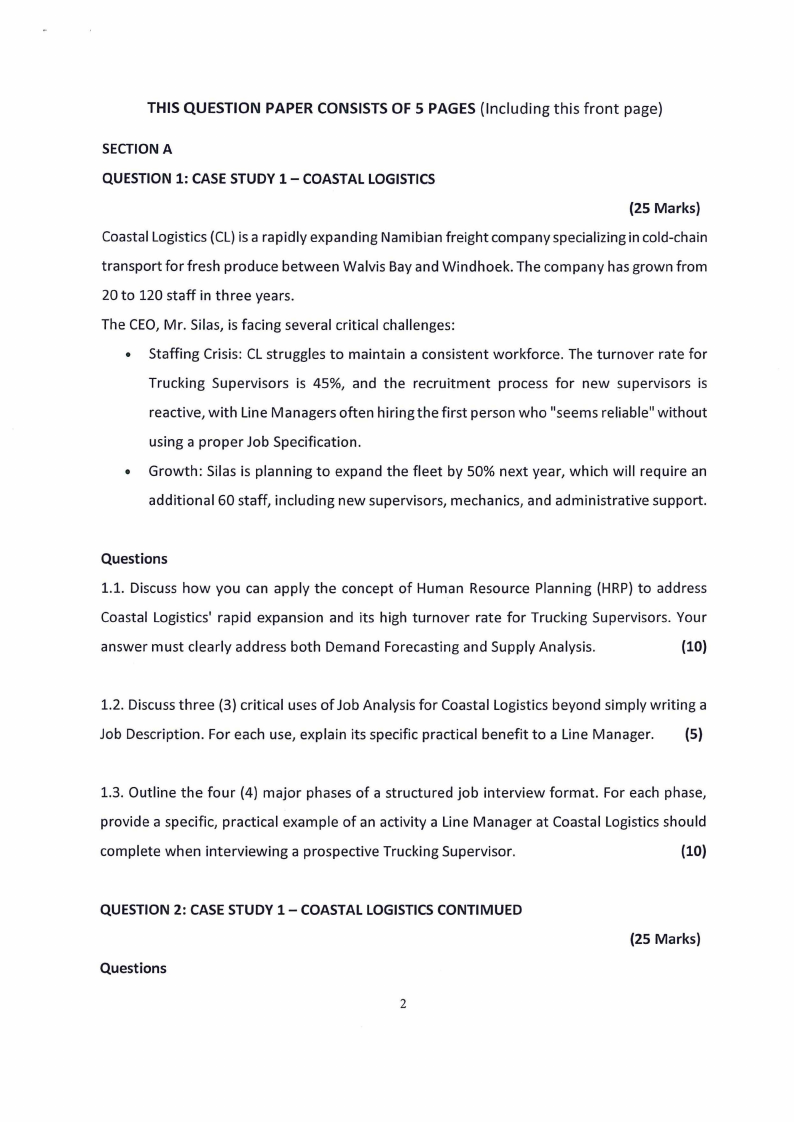
THIS QUESTION PAPER CONSISTS OF 5 PAGES (Including this front page)
SECTION A
QUESTION 1: CASE STUDY 1-COASTAL LOGISTICS
(25 Marks)
Coastal Logistics (CL) is a rapidly expanding Namibian freight company specializing in cold-chain
transport for fresh produce between Walvis Bay and Windhoek. The company has grown from
20 to 120 staff in three years.
The CEO, Mr. Silas, is facing several critical challenges:
• Staffing Crisis: CL struggles to maintain a consistent workforce. The turnover rate for
Trucking Supervisors is 45%, and the recruitment process for new supervisors is
reactive, with Line Managers often hiring the first person who "seems reliable" without
using a proper Job Specification.
• Growth: Silas is planning to expand the fleet by 50% next year, which will require an
additional 60 staff, including new supervisors, mechanics, and administrative support.
Questions
1.1. Discuss how you can apply the concept of Human Resource Planning (HRP) to address
Coastal Logistics' rapid expansion and its high turnover rate for Trucking Supervisors. Your
answer must clearly address both Demand Forecasting and Supply Analysis.
(10)
1.2. Discuss three (3) critical uses of Job Analysis for Coastal Logistics beyond simply writing a
Job Description. For each use, explain its specific practical benefit to a Line Manager. (5)
1.3. Outline the four (4) major phases of a structured job interview format. For each phase,
provide a specific, practical example of an activity a Line Manager at Coastal Logistics should
complete when interviewing a prospective Trucking Supervisor.
(10)
QUESTION 2: CASE STUDY 1- COASTAL LOGISTICS CONTIMUED
Questions
2
(25 Marks)
|
|
3 Page 3 |
▲back to top |
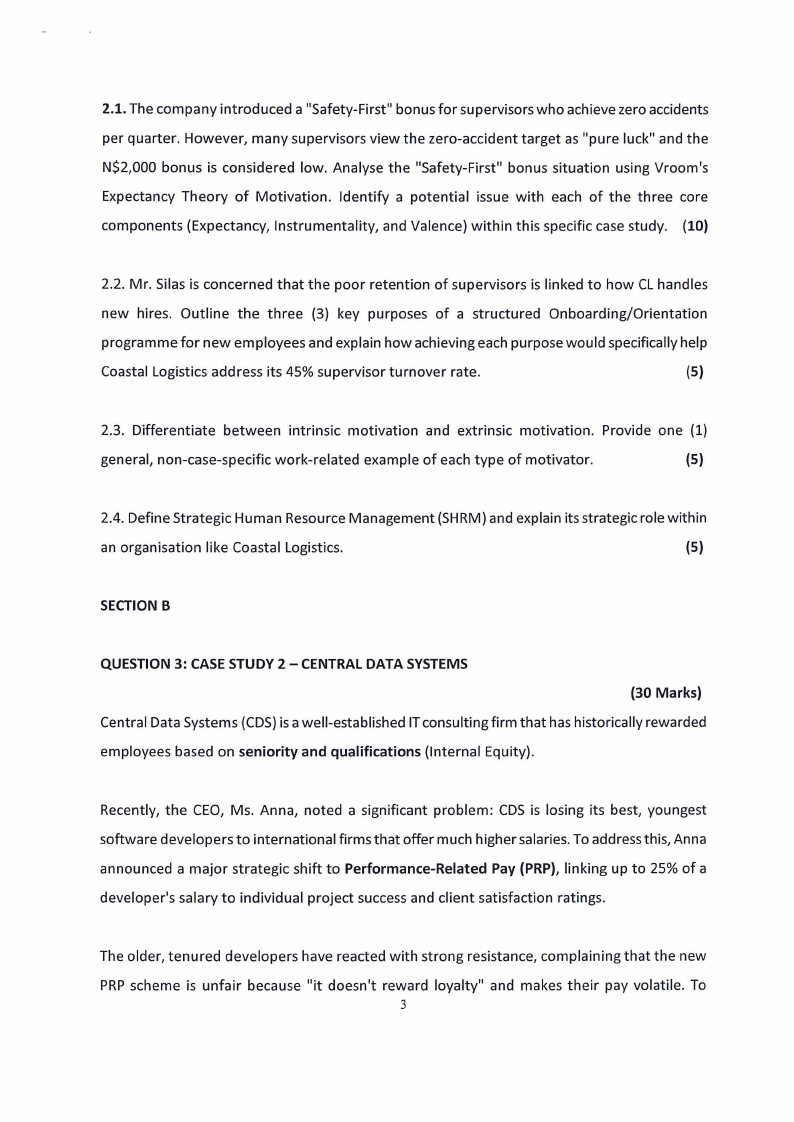
2.1. The company introduced a "Safety-First" bonus for supervisors who achieve zero accidents
per quarter. However, many supervisors view the zero-accident target as "pure luck" and the
N$2,000 bonus is considered low. Analyse the "Safety-First" bonus situation using Vroom's
Expectancy Theory of Motivation. Identify a potential issue with each of the three core
components (Expectancy, Instrumentality, and Valence) within this specific case study. (10}
2.2. Mr. Silas is concerned that the poor retention of supervisors is linked to how CL handles
new hires. Outline the three (3) key purposes of a structured Onboarding/Orientation
programme for new employees and explain how achieving each purpose would specifically help
Coastal Logistics address its 45% supervisor turnover rate.
(5)
2.3. Differentiate between intrinsic motivation and extrinsic motivation. Provide one (1)
general, non-case-specific work-related example of each type of motivator.
(5)
2.4. Define Strategic Human Resource Management (SHRM) and explain its strategic role within
an organisation like Coastal Logistics.
(5)
SECTION B
QUESTION 3: CASE STUDY 2 - CENTRAL DATA SYSTEMS
(30 Marks)
Central Data Systems (CDS) is a well-established IT consulting firm that has historically rewarded
employees based on seniority and qualifications (Internal Equity).
Recently, the CEO, Ms. Anna, noted a significant problem: CDS is losing its best, youngest
software developers to international firms that offer much higher salaries. To address this, Anna
announced a major strategic shift to Performance-Related Pay (PRP}, linking up to 25% of a
developer's salary to individual project success and client satisfaction ratings.
The older, tenured developers have reacted with strong resistance, complaining that the new
PRP scheme is unfair because "it doesn't reward loyalty" and makes their pay volatile. To
3
|
|
4 Page 4 |
▲back to top |
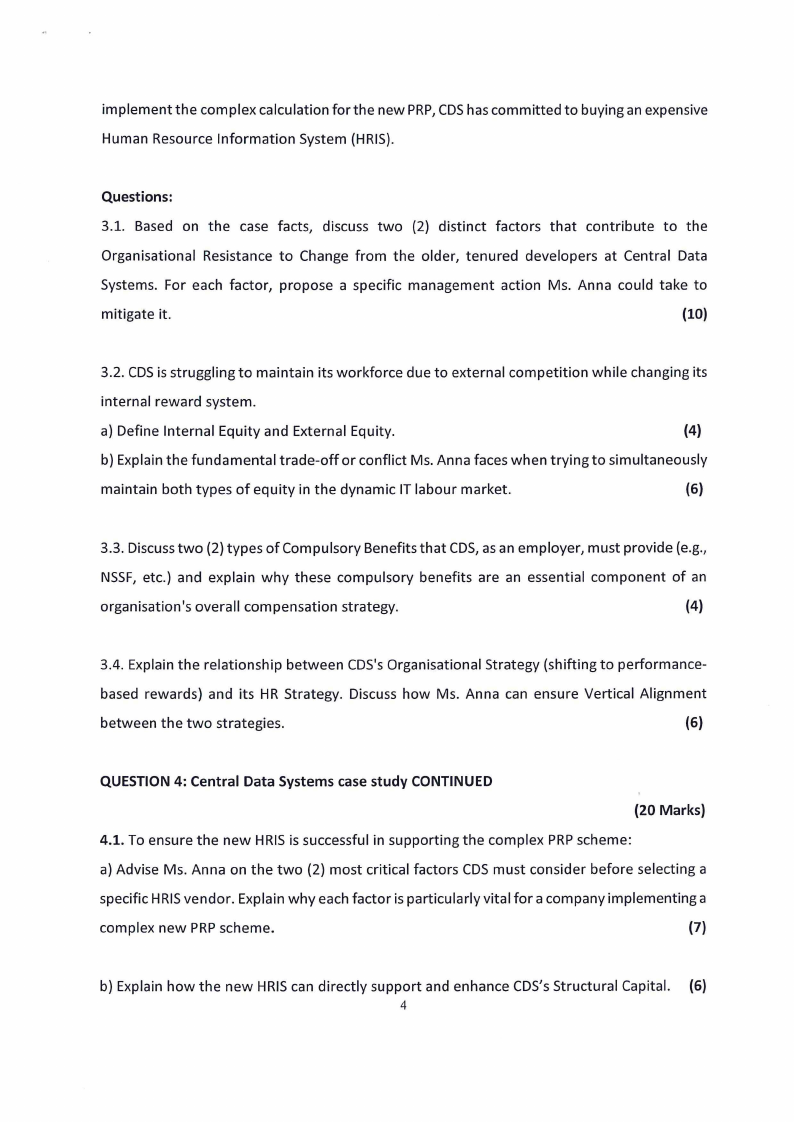
implement the complex calculation for the new PRP, CDS has committed to buying an expensive
Human Resource Information System (HRIS).
Questions:
3.1. Based on the case facts, discuss two (2) distinct factors that contribute to the
Organisational Resistance to Change from the older, tenured developers at Central Data
Systems. For each factor, propose a specific management action Ms. Anna could take to
mitigate it.
{10)
3.2. CDS is struggling to maintain its workforce due to external competition while changing its
internal reward system.
a) Define Internal Equity and External Equity.
(4)
b) Explain the fundamental trade-off or conflict Ms. Anna faces when trying to simultaneously
maintain both types of equity in the dynamic IT labour market.
(6)
3.3. Discuss two (2) types of Compulsory Benefits that CDS, as an employer, must provide (e.g.,
NSSF, etc.) and explain why these compulsory benefits are an essential component of an
organisation's overall compensation strategy.
(4)
3.4. Explain the relationship between CDS's Organisational Strategy (shifting to performance-
based rewards) and its HR Strategy. Discuss how Ms. Anna can ensure Vertical Alignment
between the two strategies.
{6)
QUESTION 4: Central Data Systems case study CONTINUED
{20 Marks)
4.1. To ensure the new HRIS is successful in supporting the complex PRP scheme:
a) Advise Ms. Anna on the two (2) most critical factors CDS must consider before selecting a
specific HRIS vendor. Explain why each factor is particularly vital for a company implementing a
complex new PRP scheme.
(7)
b) Explain how the new HRIS can directly support and enhance CDS's Structural Capital. (6)
4
|
|
5 Page 5 |
▲back to top |
4.2. Identify and briefly explain four (4) common misconceptions (myths) that managers or
employees often hold regarding the implementation and value of a new HR Information System
(HRIS).
(4)
4.3. Greiner's Organisational Growth Model is a useful tool for anticipating management
challenges. Briefly explain the primary challenge associated with the Crisis of Red Tape phase of
this model.
(3)
Total: 100
5