


 |
ESD620S - EDUCATION FOR SUSTAINABLE DEVELOPMENT A - 1ST OPP - NOVEMEBR 2025 |
|
|
1 Page 1 |
▲back to top |
" n Am I BI A u n IVE Rs I TY
OF SCIEnCE Ano TECHnOLOGY
FACULTY OF COMMERCE, HUMAN SCIENCE AND EDUCATION
DEPARTMENT OF TECHNICAL AND VOCATIONAL EDUCATION AND TRAINING (DTVET)
QUALIFICATION : DIPLOMA IN TECHNICAL AND VOCATIONAL EDUCATION AND TRAINING :
TRAINER
QUALIFICATION CODE: 06DTVT
LEVEL: 6
COURSE CODE: ESD620S
COURSE NAME: EDUCATION FOR SUSTAINABLE
DEVELOPMENT A
SESSION: NOVEMBER 2025
PAPER: PAPER 1
DURATION: 3 HOURS
MARKS: 100
FIRST OPPORTUNITY EXAMINATION QUESTION PAPER
EXAMINER(S) MR DAVID MATEU
MODERATOR: MR KAMWI SUBASUBANI
INSTRUCTIONS
1. Answer ALL the questions.
2. Read all the questions carefully before answering.
3. Number the answers clearly
THIS QUESTION PAPER CONSISTS OF 2 PAGES EXCLUDING THIS COVER PAGE
|
|
2 Page 2 |
▲back to top |

SECTION A Multiple choice
QUESTION 1
(1 MARK EACH)
1. What is the full meaning of the Acronym SDG?
A. Sustainable Development Generation
B. Sustainable Development Goal
C. Susceptible Development Goal
D. Sustained Development Goal
2. Who is responsible for the SDGs to be achieved?
A. Government only
B. Government, private sector, civil society & general public
C. Private sector & civil society only
D. General public
3. What are the 3 major aspects involved in SDGs?
A. Culture, Economic & Religion
B. Social, Economic & Environmental
C. Environmental, Power & Money
D. Social, Culture & Power
4. It is important that everyone is aware of the SDG goals.
A. Individual option
B. Yes
C. No
D. None of the above
5. How many World leaders of the UN member states agreed to the SDGs?
A. 150
B. 163
C. 205
D. 193
6. How many are the SDGs?
A. 15
B. 17
C. 21
D. 19
7. Is there a difference between SDGs and MDGs?
A. Yes
B. No
C. Not significant
D. None of the above
8. How many targets and indicators does the SDGs contain?
A. 100 & 120 respectively
|
|
3 Page 3 |
▲back to top |

B. 150 & 219 respectively
C. 169 & 232 respectively
D. 75 & 160 respectively
9. Which of the 17 SDGs are relevant to Agriculture?
A. SDG 2 only
B. SDG 2 & 15
C. SDG 12 & 4
D. SDG 2, 3 & 15
10. Sustainable Development Goal is also known as
A. Global Achievement
B. Global Goals
C. Millennium Development Goals (MDGs)
D. None of the above
[TOTAL 10 MARKS]
SECTION B
QUESTION 1
(1 Mark each)
Write down if the following statements are true or false (Write T for True and F for
A. Sustainable development Is development that meets the needs of the present
without compromising the ability of the future generations to meet their own
needs
B. Greening TVET is the process of pursuing knowledge and practices with the
intention of becoming more environmentally friendly, enhancing decision-
making and lifestyle in more ecologically responsible manner.
C. The integrity of protecting the ocean and its resources is known as Eco-Friendly.
D. The preservation, protection, or restoration of the natural environment and of
wildlife is known as Green Tech.
E. Re-use is the process of transforming waste materials into raw materials to
create entirely new products.
F. Fossil fuels are good example of renewable energy.
G. One of the good examples of Green Tech is vertical Farming.
H. Nuclear energy is an example of renewable energy
I. GREEN JOB is defined as the knowledge, abilities, values and attitudes needed
to live in, develop and support a sustainable and resource-efficient society
J. OZONE layer act like a blanket in the air, trapping heat in the atmosphere, and
warming up the Earth. This layer prevents the Earth from cooling, and thus raises
global temperatures
[TOTAL: 10 MARKS]
|
|
4 Page 4 |
▲back to top |

SECTION C
QUESTION 1
A. List three pillars of Education for Sustainable Development (3 Marks)
B. Illustrate one example on each of the pillars you listed in question 2A above
(2 Marks each
C. Illustrate any five ways how you will educate the community around you on the
concept of Education for Sustainable Development. (5 Marks)
A. List four examples on each of the following:
I. Renewable energy sources (4 Marks)
II. Non-Renewable energy sources (4 Marks)
B. Define the following key words used in the study of Education for Sustainable
Development (ESD) (2 Marks each)
I. Greening the TVET campus
II. Green jobs
III. Green skills
IV. Greening the TVET curriculum
V. Greening the TVET Research agenda
VI. Sustainable development goals
[TOTAL MARKS: 30]
|
|
5 Page 5 |
▲back to top |
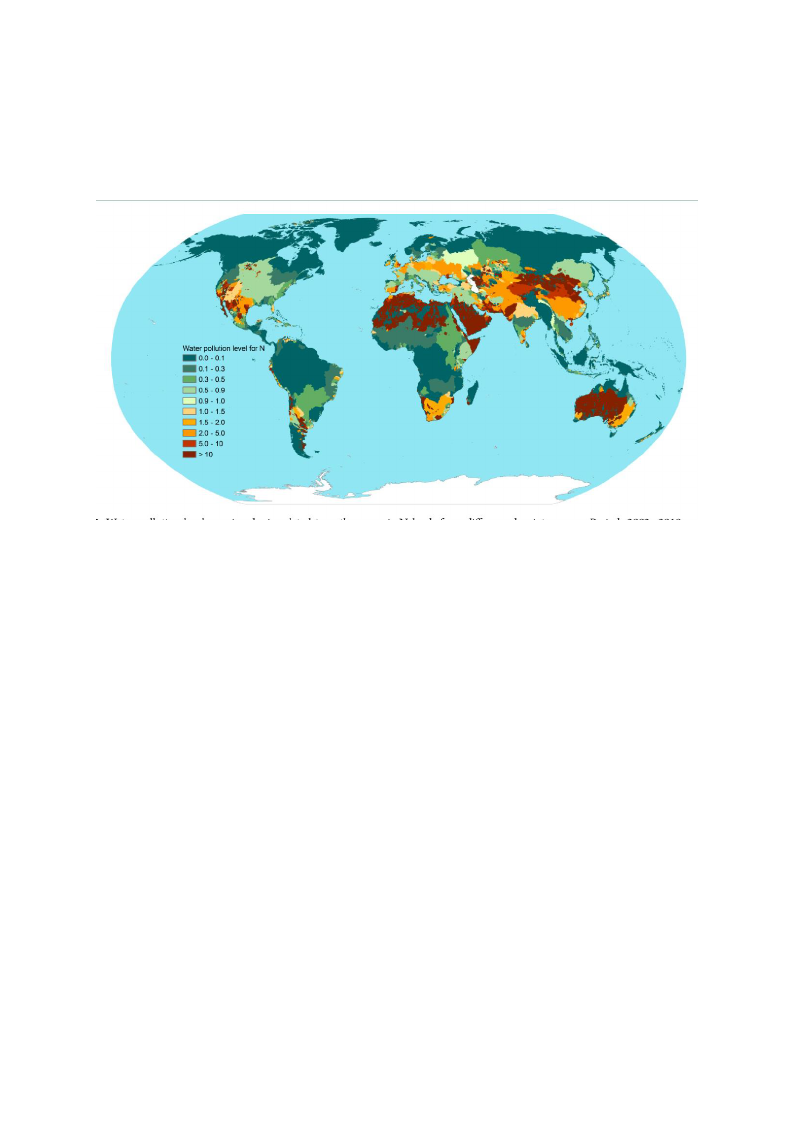
QUESTION 2
Study the world map below and answer the questions that follow.
Water Pollution Global Map
Wate< paluuon level for N
.0.0-0.1
. 0.1 - 0.3
. 0.3 - 0.5
:::::::] 0.5 0.9
O o.9 - 1.0
.......J 1.0 -1.5
::J 1.5 • 2.0
0 2.0 - 5.0
- 50.10
. ,10
Source: Google map image 2025
A. According to the map, which of the globe is free from water pollution.
(2 Marks)
B. According to map, cite one part of the globe with the highest water pollution.
(2 Markes)
C. Suggest one reason why there is higher water pollution in area you mentioned
question B above.
(2 Marks)
D. According to the map what is the water pollution readings for Namibia and suggest
one reason for that figure.
(5 Marks)
E. Apart from human sewerages, list any five substances that can pollute clean
(5 Marks)
F. Discuss any four ways on clean water can be protected.
(4 Marks)
[TOTAL: 20 MARKS]
|
|
6 Page 6 |
▲back to top |

QUESTION 4
A. Discuss any five (5) consequences of improper waste handling. (10 Marks)
B. Outline and discuss any five (5) waste minimization techniques that relate to
sustainability.
(10 Marks)
C. In a table format outline and discuss the distinction between RECYCLE and RE-
USE by using four practical examples on each side of the table. (10 Marks)
[TOTAL MARKS: 30]
[End of Paper]
TOTAL MARKS:100