


 |
PMV630S - PROJECT MANAGMENT WITHIN THE TVET ENVIRONMENT - 1ST OPP - NOV 2025 |
|
|
1 Page 1 |
▲back to top |
r
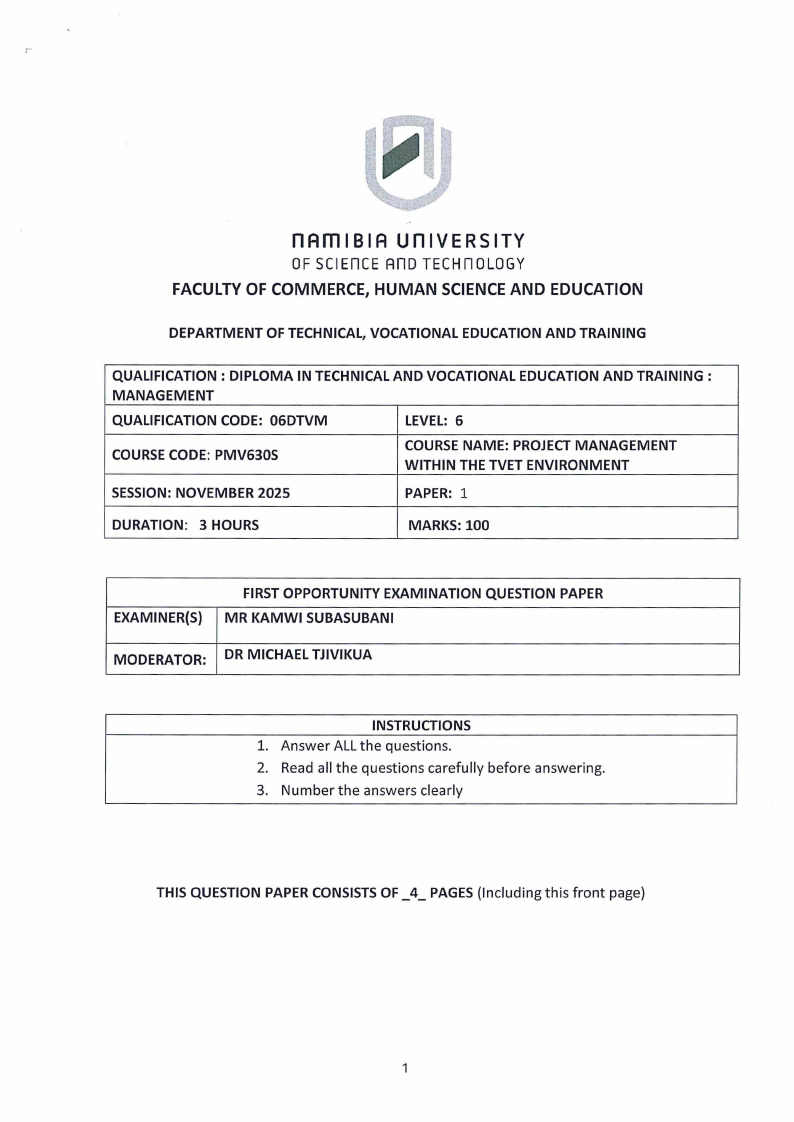
nAmlBIA unlVERSITY
OF SCIEnCE AnD TECHnDLOGY
FACULTY OF COMMERCE, HUMAN SCIENCE AND EDUCATION
DEPARTMENT OF TECHNICAL, VOCATIONAL EDUCATION AND TRAINING
QUALIFICATION: DIPLOMA IN TECHNICAL AND VOCATIONAL EDUCATION AND TRAINING:
MANAGEMENT
QUALIFICATION CODE: 0GDTVM
LEVEL: 6
COURSE CODE: PMV630S
COURSE NAME: PROJECT MANAGEMENT
WITHIN THE TVET ENVIRONMENT
SESSION: NOVEMBER 2025
PAPER: 1
DURATION: 3 HOURS
MARKS: 100
EXAMINER(S)
FIRST OPPORTUNITY EXAMINATION QUESTION PAPER
MR KAMWI SUBASUBANI
MODERATOR: DR MICHAEL TJIVIKUA
INSTRUCTIONS
1. Answer ALL the questions.
2. Read all the questions carefully before answering.
3. Number the answers clearly
THIS QUESTION PAPER CONSISTS OF_4_ PAGES (Including this front page)
1
|
|
2 Page 2 |
▲back to top |
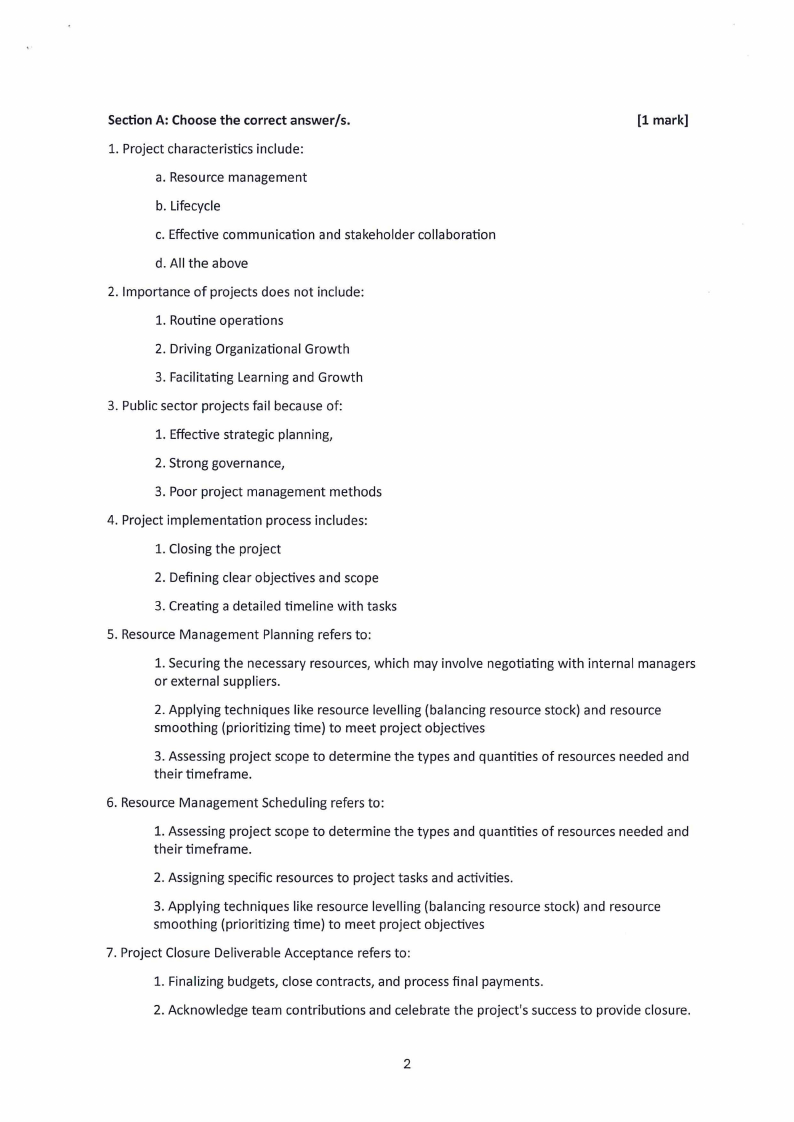
Section A: Choose the correct answer/s.
[1 mark]
1. Project characteristics include:
a. Resource management
b. Lifecycle
c. Effective communication and stakeholder collaboration
d. All the above
2. Importance of projects does not include:
1. Routine operations
2. Driving Organizational Growth
3. Facilitating Learning and Growth
3. Public sector projects fail because of:
1. Effective strategic planning,
2. Strong governance,
3. Poor project management methods
4. Project implementation process includes:
1. Closing the project
2. Defining clear objectives and scope
3. Creating a detailed timeline with tasks
5. Resource Management Planning refers to:
1. Securing the necessary resources, which may involve negotiating with internal managers
or external suppliers.
2. Applying techniques like resource levelling (balancing resource stock) and resource
smoothing (prioritizing time) to meet project objectives
3. Assessing project scope to determine the types and quantities of resources needed and
their timeframe.
6. Resource Management Scheduling refers to:
1. Assessing project scope to determine the types and quantities of resources needed and
their timeframe.
2. Assigning specific resources to project tasks and activities.
3. Applying techniques like resource levelling (balancing resource stock) and resource
smoothing (prioritizing time) to meet project objectives
7. Project Closure Deliverable Acceptance refers to :
1. Finalizing budgets, close contracts, and process final payments.
2. Acknowledge team contributions and celebrate the project's success to provide closure.
2
|
|
3 Page 3 |
▲back to top |
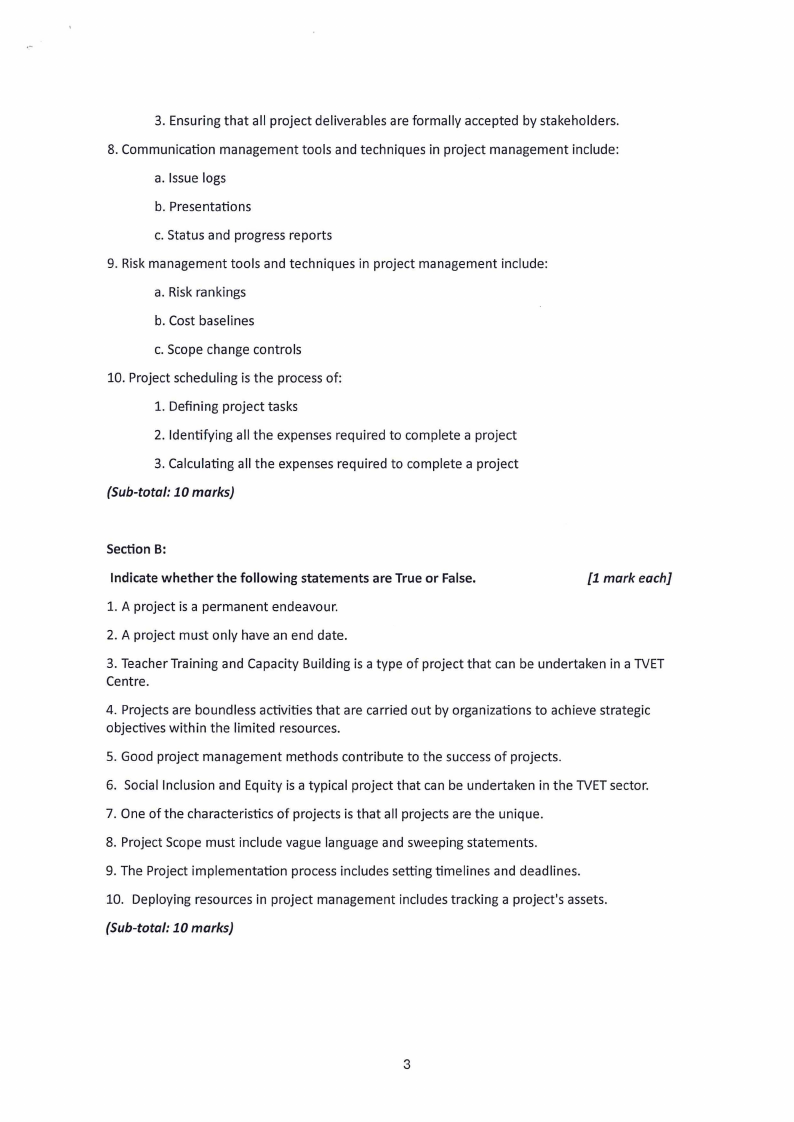
3. Ensuring that all project deliverables are formally accepted by stakeholders.
8. Communication management tools and techniques in project management include:
a. Issue logs
b. Presentations
c. Status and progress reports
9. Risk management tools and techniques in project management include:
a. Risk rankings
b. Cost baselines
c. Scope change controls
10. Project scheduling is the process of:
1. Defining project tasks
2. Identifying all the expenses required to complete a project
3. Calculating all the expenses required to complete a project
{Sub-total: 10 marks)
Section B:
Indicate whether the following statements are True or False.
{1 mark each]
1. A project is a permanent endeavour.
2. A project must only have an end date.
3. Teacher Training and Capacity Building is a type of project that can be undertaken in a TVET
Centre .
4. Projects are boundless activities that are carried out by organizations to achieve strategic
objectives within the limited resources.
5. Good project management methods contribute to the success of projects.
6. Social Inclusion and Equity is a typical project that can be undertaken in the TVET sector.
7. One of the characteristics of projects is that all projects are the unique.
8. Project Scope must include vague language and sweeping statements.
9. The Project implementation process includes setting timelines and deadlines.
10. Deploying resources in project management includes tracking a project's assets.
{Sub-total: 10 marks)
3
|
|
4 Page 4 |
▲back to top |
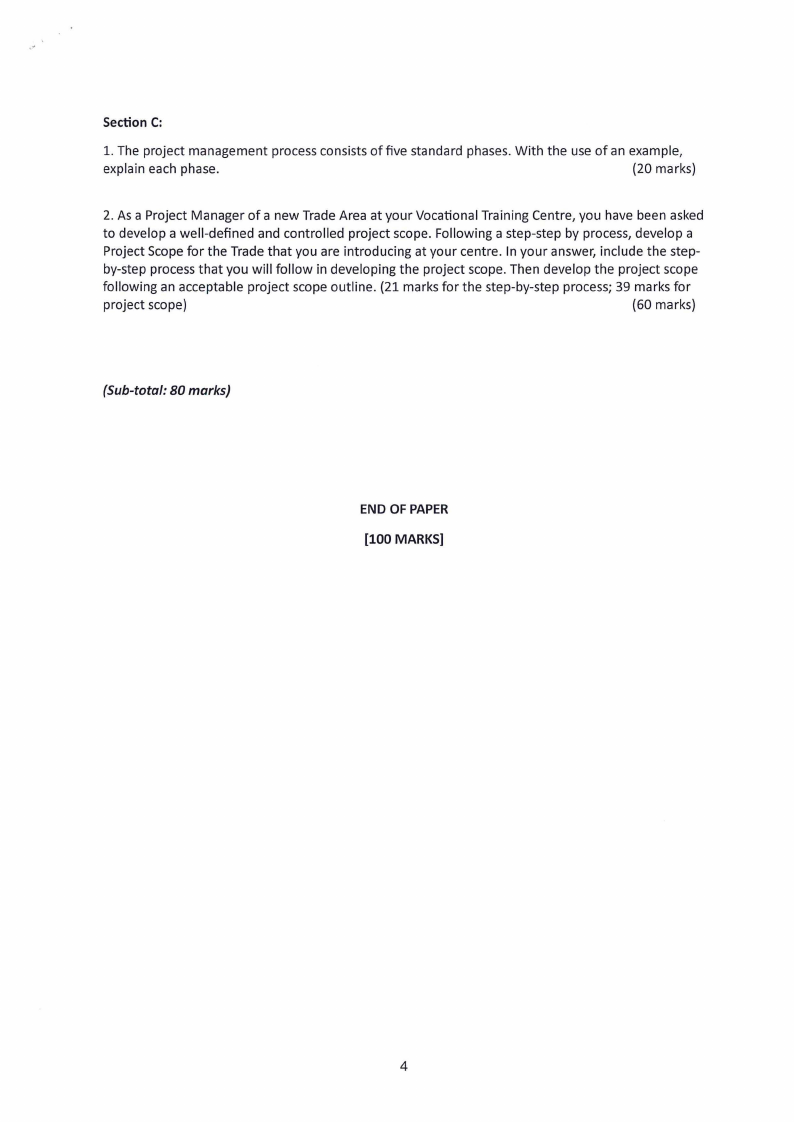
Section C:
1. The project management process consists of five standard phases. With the use of an example,
explain each phase .
(20 marks)
2. As a Project Manager of a new Trade Area at your Vocational Training Centre, you have been asked
to develop a well-defined and controlled project scope. Following a step-step by process, develop a
Project Scope for the Trade that you are introducing at your centre . In your answer, include the step-
by-step process that you will follow in developing the project scope. Then develop the project scope
following an acceptable project scope outline. (21 marks for the step-by-step process; 39 marks for
project scope)
(60 marks)
(Sub-total: 80 marks)
END OF PAPER
[100 MARKS]
4